



The best mechanic tool sets are not necessarily based on the most expensive or most pieces of any type, but rather on what they require for their daily work. The perfect combination of full coverage for the drive, lightweight, rugged design and proven ratchet performance in tight engine bays and high torque situations.
Key Takeaways:
- Do not give a mechanic judgment based on the number of tools: The 1/4″, 3/8” and 1/2” drive coverage, continuous metric sockets, 72-tooth ratchets, and CrV steel are all important.
- As a technician, you’re just beginning a new year at a new service bay, buying the best value, or replacing an outdated socket set to become a standalone, the proper socket category can save hundreds of dollars in needless buying.
- Test tool sets as a shop owner, not a user who is just buying a tool set.
This guide will give you a look at the top mechanic tool sets, an understanding of what professional mechanics consider when buying one and what to search for in warranties, storage and durability before you buy one.
1: Best mechanic tool sets: at a glance
Tool set | Best for | Pieces | Drive sizes | Approx. price (USD)* | Warranty |
GearWrench 232-Piece Mechanics Tool Set (Model 80966) | Best overall | 232 | 1/4″, 3/8″, 1/2″ | $220–300 | Limited Lifetime |
GearWrench 613-Piece Master Mechanics Tool Set (Model 80972) | Best Professional | 613 or 614, depending on SKU revision | 1/4″, 3/8″, 1/2″ | $900–1,300 | Limited Lifetime |
TEKTON 211-Piece Mechanic’s Tool Set | Best starter | 211 | 1/4″, 3/8″, 1/2″ | $180–260 | Lifetime |
Craftsman VERSASTACK 262-Piece Mechanics Tool Set | Best for the money | 262 | 1/4″, 3/8″, 1/2″ | $170–250 | Full Lifetime |
Husky 270-Piece Mechanics Tool Set with Storage (H270CONNECT or current equivalent) | Best complete mechanic tool set with box | 270 | 1/4″, 3/8″, 1/2″ | $160–200 | Lifetime |
TEKTON 3/8-In. Drive 6-Point Socket & Ratchet Set (106-Piece) | Best mechanic socket set | 106 | 3/8″ drive | $120–180 | Lifetime |
Note: Piece counts, product configurations, warranties, and retail pricing may vary by manufacturer SKU, retailer, promotional discounts, and region.
What each pick is for
You can get a quick read on the above comparison table as a shop owner. They can see the columns of the tool set, piece count, drive sizes, approximate price and warranty information. The owners can pick options suitable for their shop requirements.
How to use this comparison
If a shop owner wants to buy a 200-250-piece set for under $250, he/she must consult the graphic designer to determine which designs to use. First, you need to sort by the price and pieces columns. Then, verify the size of drives. If there are all three sizes (1/4, 3/8 and 1/2) it is good. Last, look at the warranty column at the end to ensure the warranty is for long-term professional use.
The number of pieces is not the most important measure of quality. Rather, search for full drive-sized coverage. Independent automotive publications consistently recommend evaluating mechanic tool sets by drive-size coverage, socket range, ratchet quality, and overall build quality rather than relying on advertised piece count alone.
The number of ratchets is specified (e.g. 72T), which is better for narrow engine bays. Besides, always choose to have commercial warranty coverage.
Price ranges at a glance
A beginner-level mechanic set costs around $120-$180. A mid-level professional mechanic set with all three drive sizes costs around $150-$450. Premium master mechanic sets with 500+ pieces often start at $800 and can exceed $2,000.
2: Best overall mechanic tool set
There are numerous styles of mechanic tool sets available in the market. Varying brands and specifications. How do you know which one is best for your mechanics and your shop’s needs? Let’s dissect all that to make sure you know which ones to purchase.
What’s in the set
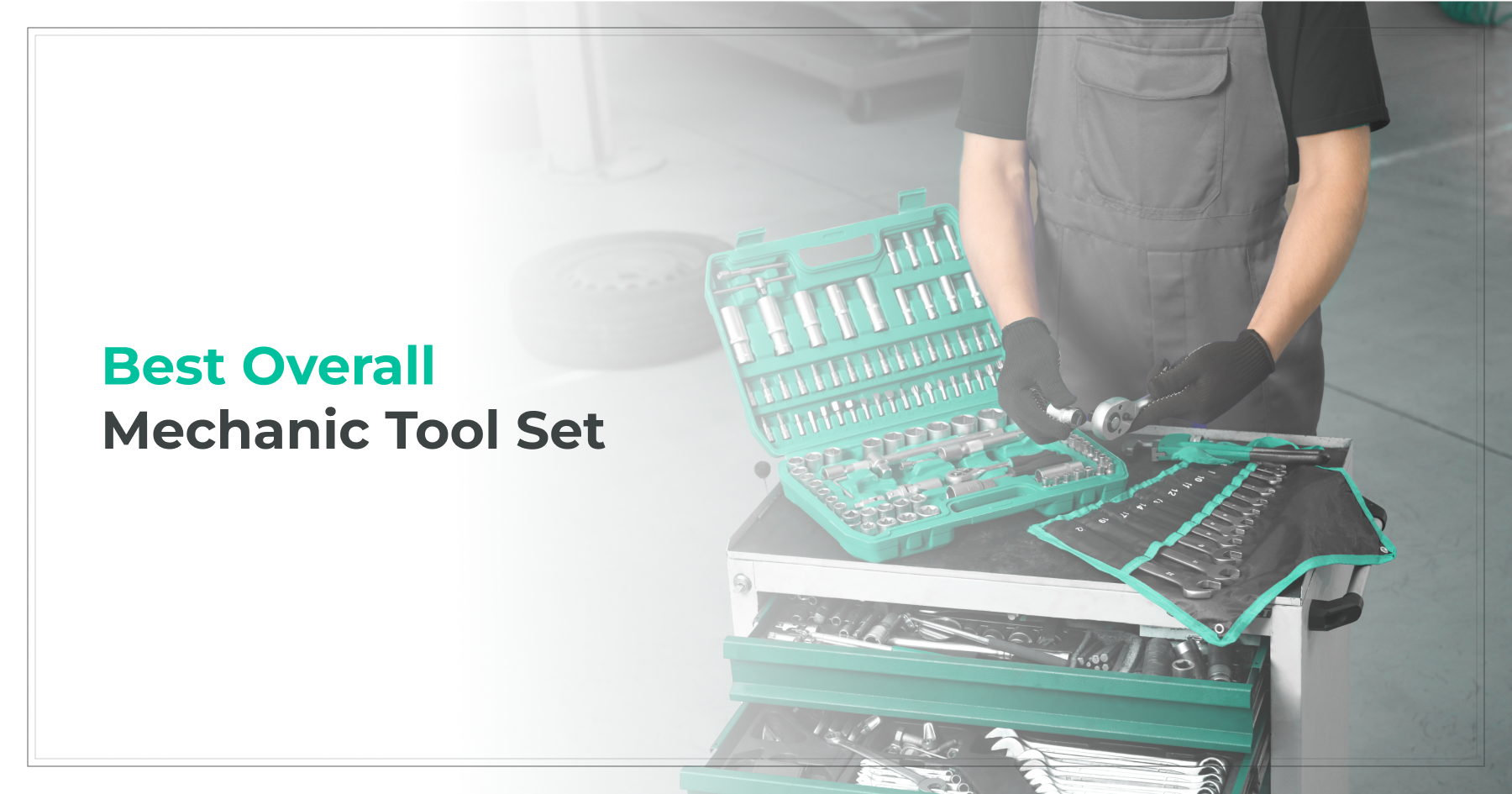
GearWrench 232-Piece Mechanics Tool Set (Model 80966) is the best overall mechanic tool set. This is because it provides balanced coverage, durability, and portability that are essential in most professional scenarios.
All 3 sizes of the drive are required for the best set. In addition, metric and SAE sockets, shallow and deep sockets, extensions, universal joints, hex bits, and spark plug sockets, as well as a durable blow-moulded carrying case. All these can mean that technicians won’t have to make extra purchases to complete the majority of repair tasks each day.
Performance in professional shop conditions
When performing a typical brake, suspension or engine diagnostic job, technicians will have to spend most of their time using the 3/8-inch ratchet and the various 8mm–19mm sockets, whereas the 1/4-inch drive will be used for interior panels, sensors, and smaller fasteners. The 1/2″ drive is used only for higher torque applications, such as axle nuts or suspension components.
There are occasions when the technicians purchase a set based on the number of headlines. Rather, search for consistent sizes that range from 8 to 24 mm in sockets and have no gaps. A ratchet with 72 teeth or more is good for small swing arcs in small bay areas. Also, lock case latches for everyday moving between bays.
Pros and cons
GearWrench is consistently recommended among the leading mechanic tool brands by automotive publications such as The Drive for its high-quality ratchets, lifetime warranty, and professional-grade construction.
Pros
- Most repair work is covered with 1/4″, 3/8″ and 1/2″ drive coverage.
- Quality ratchets can be used in the workplace every day.
- Well-designed and long-lasting case at a competitive price compared to high-dollar truck brands.
Cons
- May not contain all the advanced diagnostics specialty sockets.
- If the tools are misplaced, blow-moulded cases can become cumbersome to reorganise.
- Weighing heavier than compact technician kits, larger sets are harder to carry.
3: Best professional mechanic tool set for shop and bay use
What does professional-grade actually mean
Professional-grade does not always have to mean premium brand. In a shop context, a professional mechanic’s tool set includes:
- The sockets and hand tools are made of chrome vanadium (CrV) steel.
- 72-tooth minimum ratchets
- Continuous 8–24 mm metric socket coverage with no skipped sizes
- Deep and shallow sockets
- Warranty appropriate for regular business use
When technicians are working on the bay, professional mechanic shop equipment should handle brake, suspension, steering and engine repair jobs from the start.
What’s in the set
Feature | Professional mechanic tool set | Standard consumer tool set |
Socket coverage | Full-sized metric and SAE coverage, usually with no gaps in size from 8mm to 24mm, in either 1/4″, 3/8″ or 1/2″ drive. | Usually has limited coverage with missing size(s) or fewer drive options. |
Deep well sockets | Provides for both deep and shallow sockets for a wider variety of repair jobs. | May only use shallow sockets or a few deep sockets. |
Ratchet quality | Fine-tooth ratchets (typically 72 teeth or more) are designed for frequent use and tight engine bays | Lower tooth-count ratchets with larger swing arcs and reduced durability |
Tool material | Daily use alloy steel (Chrome Vanadium (CrV)) | May specify lower-grade steel or offer some materials specifications |
Storage case | Strong blow-moulded case with durable latches for easy moving from bay to bay. | A case that is basic and used mainly for storage, not for long-term use, it has less sturdy hinges and latches urable hinges and latches |
Best suited for | Setting up a tech bay for everyday business repairs. | Some home repairs and home garage repairs need to be done occasionally. |
Pros and cons
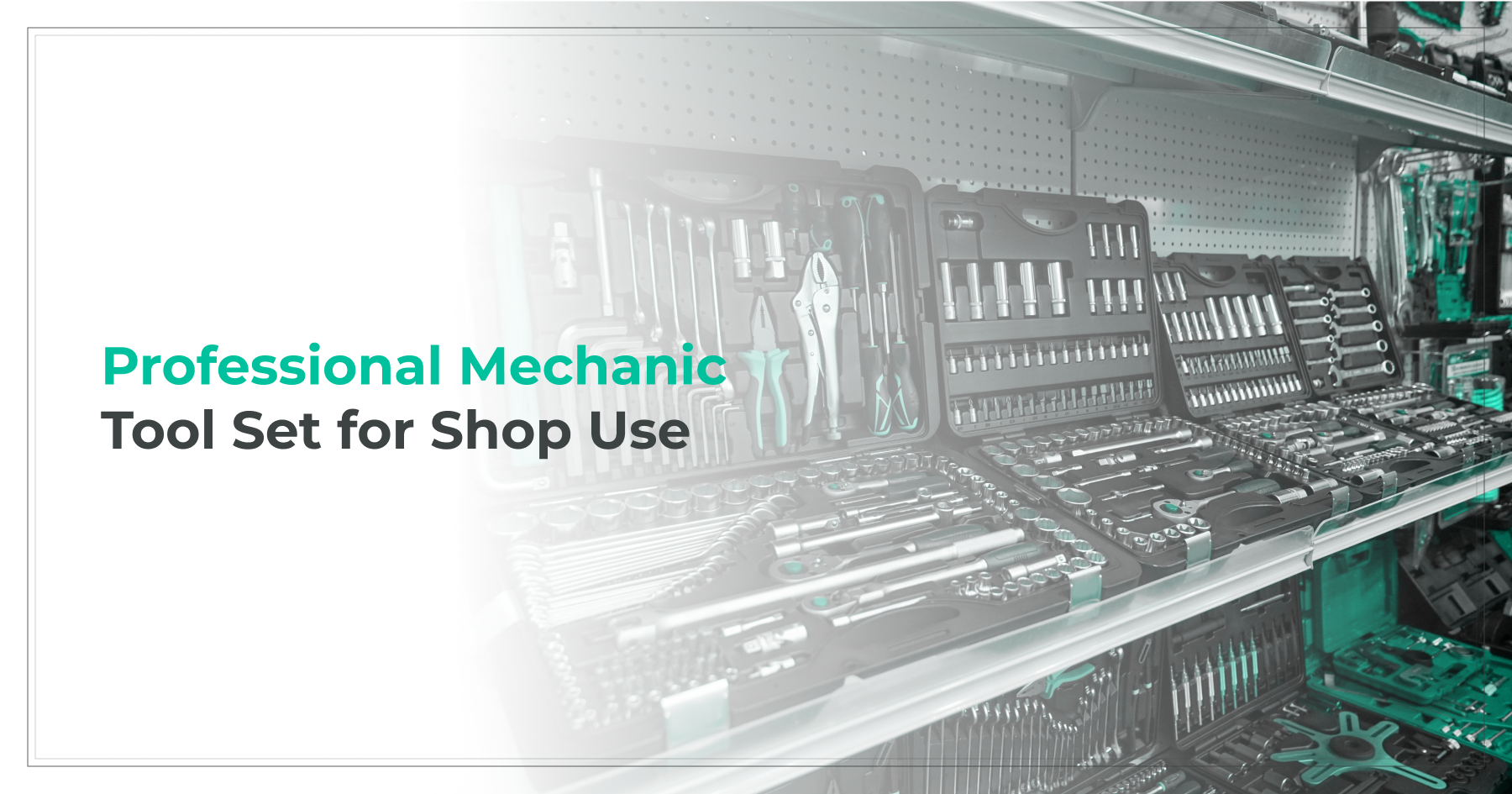
GearWrench 613-Piece Master Mechanics Tool Set (Model 80972) is the recommended professional mechanic tool set. It satisfies the criteria mentioned above, such as complete 1/4″, 3/8″ and 1/2″ drive coverage, metric and SAE sockets, deep and shallow sockets, chrome vanadium (CrV) steel construction and a lifetime warranty.
This is due to the fact that CrV is widely used in professional hand tools. This is because of its strength and wear resistance. ASME B107 sets the standards for the performance and safety of hand tools. This includes dimensions, hardness, and torque. That is why it is important to check the material specification and compliance with industry-recognised standards where they exist.
Pros
- Chrome vanadium steel is built for everyday work.
- Wide selection of sockets and deep and shallow sockets in all three drive sizes.
- Lifetime warranty on durable ratchets.
Cons
- More expensive initial purchase than mid-range mechanic sets.
- If you have a large case, you need a lot of space to store it.
- Not a substitute for dedicated automotive tools (e.g., torque wrenches or diagnostic tools).
- A professional starter mechanic tool set is for a new mechanic. They require a full set of mechanical tools as a novice.
4: Best starter mechanic tool set for new technicians
What a professional starter set must include
A professional starter mechanic tool set is for technicians who just started working. As a beginner, they need a complete mechanic tool set.
A good set includes: 3/8″ drive as the primary workhorse, metric sockets covering at least 8mm–22mm, combination wrenches, screwdrivers, pliers, ratchet with 72+ teeth.
This durable carrying case suitable for daily transport and can work for 6-12 months straight without the need to buy additional supplements.
What’s in the set
During the first two weeks, technicians will use basic tools that handle maintenance or engine service tasks. Later in the week or occasionally, they will use sophisticated tools like bits or sockets. As they move forward, they make their initial purchase and add pliers, wrenches, or sockets as required.
Tools you’ll use in the first two weeks | Less frequent use (initially) | Buy as your responsibilities grow |
3/8″ drive ratchet | 1/4″ drive sockets | Torque wrench |
Metric sockets (8mm–19mm, ideally up to 22mm) | Larger sockets (beyond common daily sizes) | Impact socket set |
Combination wrenches (8mm–19mm) | Specialty bits (Torx, security, hex, etc.) | Pry bar set |
Phillips and flathead screwdrivers | Universal joints and specialty adapters | Pick and hook set |
Slip-joint and needle-nose pliers | Spark plug sockets (depending on shop workload) | Locking pliers and specialty pliers |
Socket extensions | Breaker bar (used as needed) | Diagnostic tools (multimeter, scan tool, test light) |
Note: The tools used daily can differ based on shop specialization.
Technicians go for buying a low-cost, under $80 mechanic tool set. They opt for it because it offers more pieces and costs less. However, these sets often do not have the right tools and features mentioned above.
TechForce Foundation states that many shops expect technicians to arrive with their own tools on day one. A basic professional starter toolbox can cost $1,500–4,000. This is why it is important to prioritise durable, everyday-use tools first and expand your collection over time.

Pros and cons
TEKTON 211-Piece Mechanic’s Tool Set (SKU SKT15311) is the featured beginner mechanic tool set. Pro Tool Reviews recommends Craftsman Mechanics Tool Sets as its Best Beginner pick, making it a credible choice for technicians entering the trade.
Pros
- Covers the majority of everyday repairs during the first year.
- Better overall value than buying individual tools.
- Provides a strong foundation that can be expanded over time.
Cons
- Doesn’t include many specialty diagnostic or heavy-duty tools.
- Some accessories may see limited use initially.
- Most technicians will still need to purchase additional tools as responsibilities grow.
5: Best mechanic tool set for the money
What does value mean for a professional buyer
A professional buyer may think the best mechanic set is the one that’s the cheapest in terms of money.
The best mechanic tool set for the money means the one that offers professional daily-use standards. Also, provides the highest durability and better coverage per dollar.
A mid-range mechanic set, priced between $150-$300, often provides the best balance of durability, socket coverage, and warranty. Craftsman and GearWrench are recommended by independent automotive publications such as The Drive as best overall, best beginner, and best professional mechanic tool sets.
What’s in the set
A shop owner is selecting a value-tier set for the second technician bay. He can accept certain trade-offs. Basic blow-moulded carrying case, fewer specialty sockets, limited deep sockets and fewer accessories.
Some features are non-negotiable. They should never compromise on missing metric socket sizes, a 72+ tooth ratchet, and chrome Vanadium (CrV) steel. Also, check for a commercial/lifetime warranty with complete 1/4″, 3/8″, and 1/2″ drive coverage.
Shop owners often choose a set because it’s on promotional pricing or offers discounts. Don’t save on discounts unless you evaluate the warranty terms, confirm the ratchet mechanism is serviceable rather than disposable, and verify that the product specifications list chrome vanadium (CrV) steel and complete socket coverage. A good value mechanic set should perform reliably in daily use.
Pros and cons
Craftsman VERSASTACK 262-piece Mechanics Tool Set fits the $150-250 price range.
Pros
- Excellent value for professional daily use.
- Complete drive-size coverage with quality ratchets.
- Lifetime warranty at a mid-range price.
Cons
- Fewer specialty sockets than premium master sets.
- Basic carrying case compared with higher-end storage systems.
- Some deep sockets or specialty tools may require a separate purchase.
6: Best complete mechanic tool set with toolbox included
What’s included in a complete set with storage
These are complete mechanic tool sets sold as a single SKU. This includes hand tools as well as storage. There are a total of 270–800 pieces, such as a rolling chest, drawer cabinet, or portable toolbox, to name a few. These are designed to equip a bay from day one without purchasing separate storage.
When a bundled toolbox makes sense versus buying separately
Option | Example | Total Cost | Best for |
Separate purchases | 200-piece tool set ($200) + portable toolbox ($150) | $350 | Shops that already own storage or want flexibility |
Bundled complete set | 280-piece set with rolling chest ($280) | $280 | New bays need tools and storage immediately |
Bundle mechanic sets are a good buy when equipping a brand-new technician bay. Technicians want to keep tools organized from day one. From a price point of view, it reduces upfront costs and saves costs as compared to purchasing separately.
Separate purchases are good when the auto shop already has storage. They require high-quality tool chests or plans to expand in the future.
It is often assumed that a bundled complete mechanic tool set includes every tool needed for professional work. Instead, verify storage provides full-depth drawers or only a shallow carry tray. Check that the set includes adequate metric socket coverage. Also, confirm that the storage can be reorganised instead of locking every tool into a fixed moulded layout.
Pros and cons
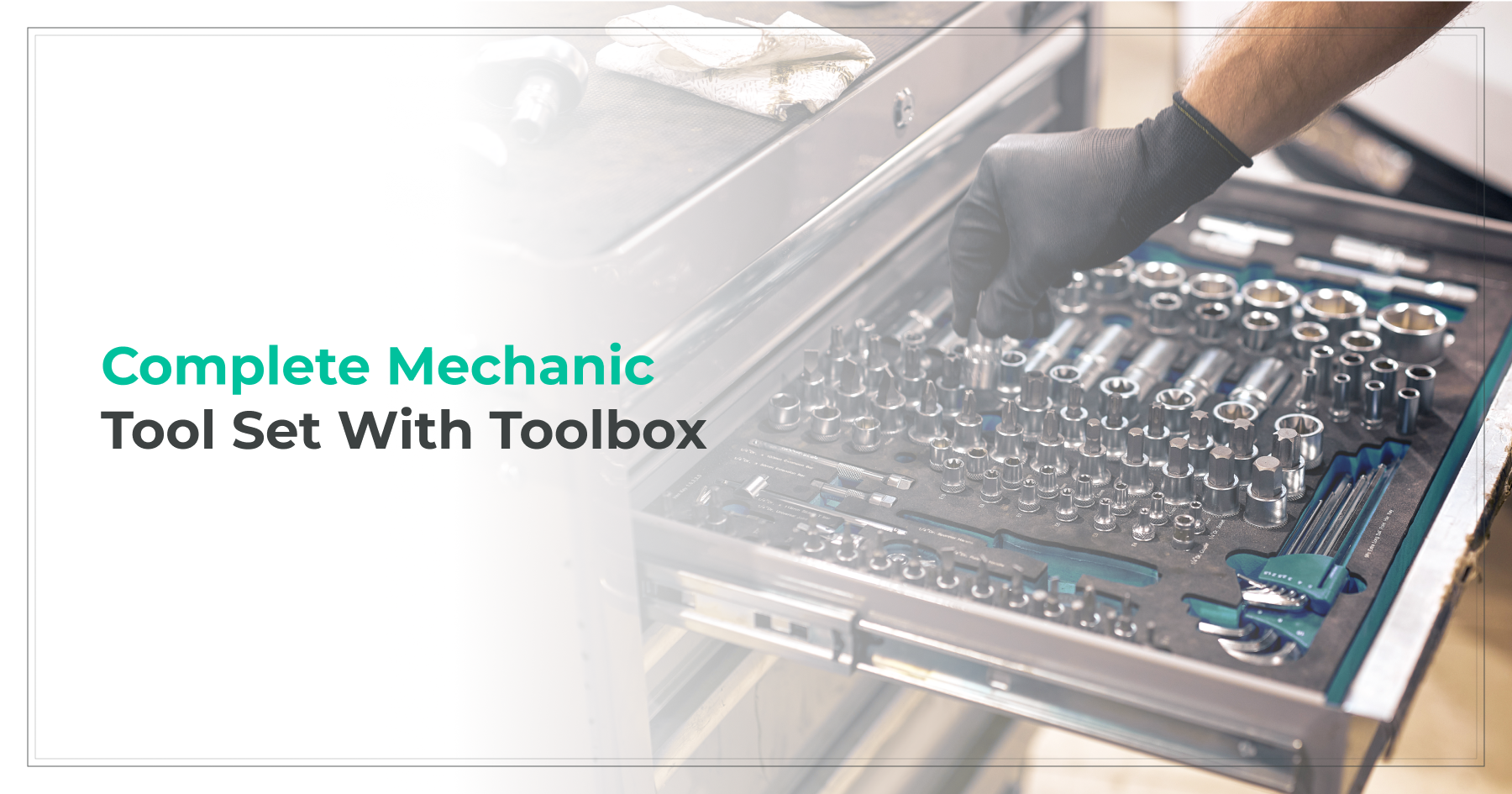
Husky 270-Piece Mechanics Tool Set is a popular value option when looking for a bundled set and includes storage, too.
Pros
- Tools and storage are included in one purchase.
- Faster bay setup and better organization.
- Often lower total cost than buying separately.
Cons
- Storage quality may be more basic than standalone tool chests.
- Fixed layouts can limit customization.
- Some bundled sets still require specialty tools to be purchased separately.
7: Best mechanic socket set
6-point vs 12-point sockets: what professional mechanics use and why
A socket set is used along with a full mechanic tool set. Auto shops already have hand tools and now require/need better socket coverage or replacements. Also, technicians need to replace old, worn-out sockets without the need to repurchase a full kit.
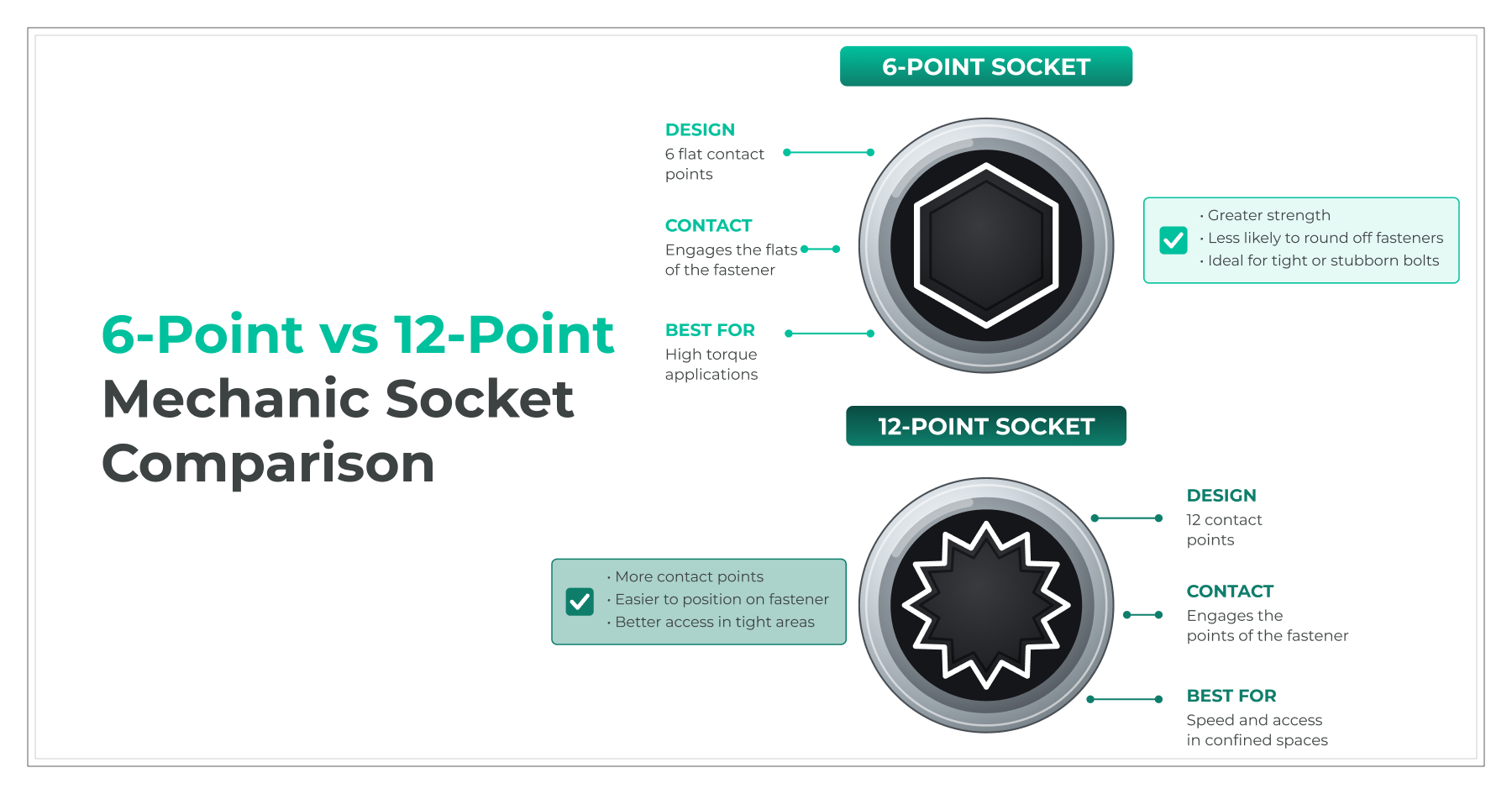
6-point sockets grip the flat sides of fasteners. It distributes torque evenly and reduces the risk of rounding corroded or over-tightened bolts. 12-point sockets are easier to position on a fastener. But they are more likely to slip under high torque.
A technician is removing a corroded bolt in a confined engine bay. They can benefit more from a 3/8-inch drive 6-point socket. This prevents fastener damage, saves repair time and avoids extraction work.
Drive sizes and socket depths to prioritize
As per community discussions in r/MechanicAdvice(June 2026), the 3/8-inch drive handles the majority of everyday automotive repairs. Whereas a 1/2-inch drive is reserved for high-torque applications. This includes wheel lugs, axle nuts, and suspension fasteners.
A common mistake is choosing a 12-point socket set because it has more pieces. Instead, prioritize a 6-point metric socket set with complete 8mm–24mm coverage in both shallow and deep configurations. Also, check usable coverage and durability rather than higher piece counts. Here are some features to prioritize when you purchase socket sets:
- Metric socket coverage from 8mm to 24mm
- Both shallow and deep sockets
- 3/8-inch drive as the core set
- Purchase 1/2-inch impact sockets separately for wheel and axle work
Pros and cons
TEKTON 3/8-Inch Drive 6-Point Socket Set or an equivalent high-quality standalone socket set covers all the features mentioned above.
Pros
- Better value than replacing an entire mechanic tool set.
- Stronger grip on fasteners with reduced rounding risk.
- Easy to expand an existing tool collection.
Cons
- Doesn’t include ratchets or other hand tools.
- High-torque work still requires dedicated impact sockets.
- Some sets focus on metric or SAE only, requiring additional purchases.
8: What to look for in a mechanic tool set: a shop owner’s buying criteria
Drive size coverage and ratchet tooth count
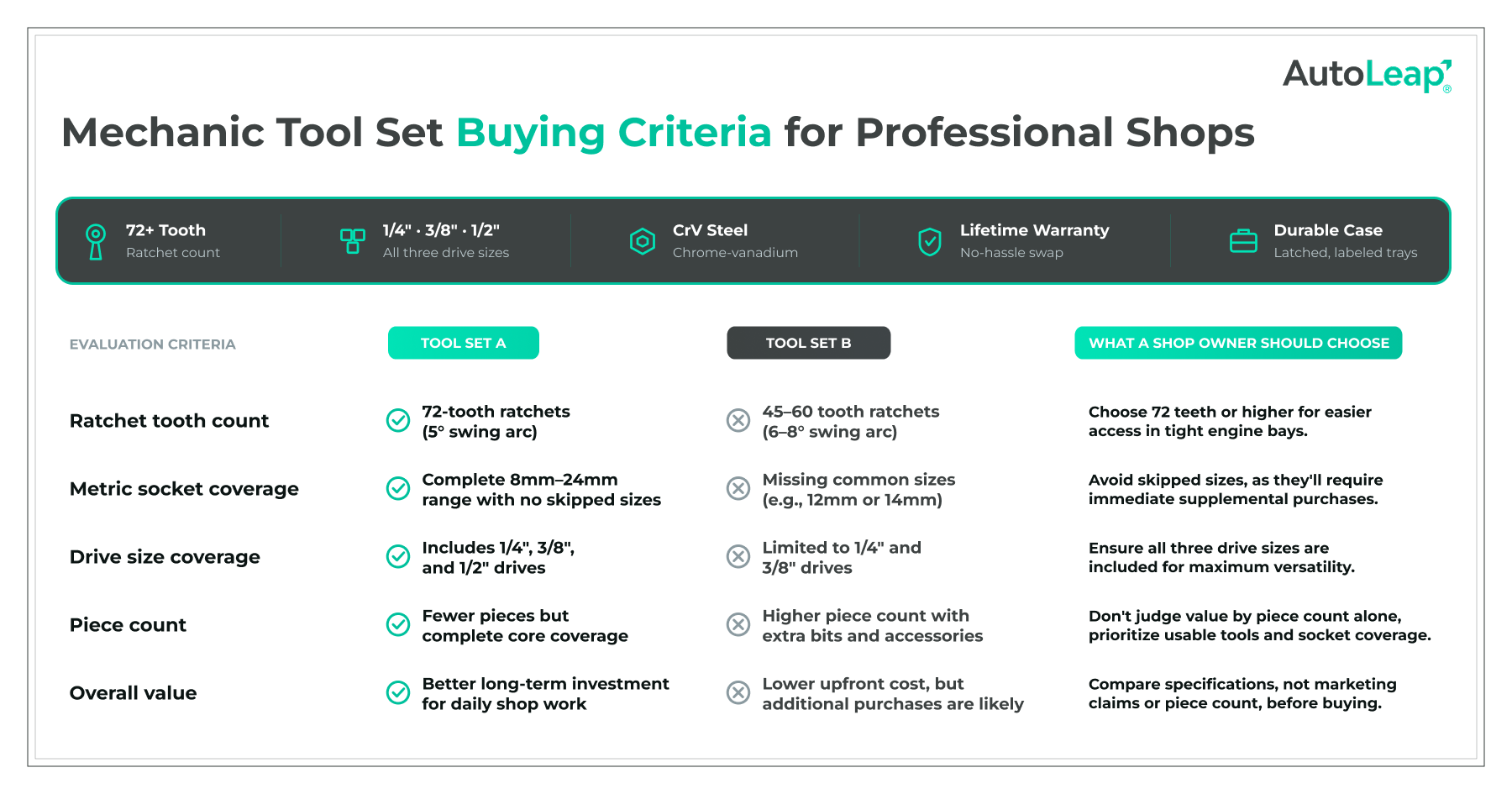
A professional mechanic’s tool set should include 1/4″, 3/8″, and 1/2″ drive ratchets and sockets. These are used for:
- 1/4″ drive: interior work, trim, electronics, and small fasteners.
- 3/8″ drive: the primary workhorse for engine, brake, and drivetrain repairs. A
- 1/2″ drive: wheel lugs, suspension, axle nuts, and other high-torque applications.
Comparing two similarly priced mechanic tool sets
A shop owner is opening a new shop. He is confused as to which tool set to choose and finds clarity below.
Steel grade and warranty terms for professional use
A common mistake is choosing the set with the highest piece count. This often overlooks material quality and warranty coverage. Instead, confirm that:
- Chrome Vanadium (CrV) steel is explicitly stated in the product specifications.
- The ratchet mechanism is replaceable or serviceable, not a sealed disposable unit.
- The warranty explicitly covers commercial or professional use, where applicable.
- Replacement procedures are straightforward (local retailer exchange or manufacturer support).
The chromium and vanadium found in chrome vanadium (CrV) steel make it harder, more wear-resistant, tougher and more corrosion-resistant than plain carbon steel, which makes it a popular choice for professional hand tools.
The performance of the tools is also dependent on the heat treatment and manufacturing quality, not the alloy itself. ASME B107 specifies performance and safety criteria for hand tools, but does not make a comparison between the tensile and yield strength of CrV and carbon steel.
Investing in the right mechanic tool set improves efficiency, but physical tools are only part of the equation. Pairing them with mechanic shop management software helps automate operations and boost productivity.