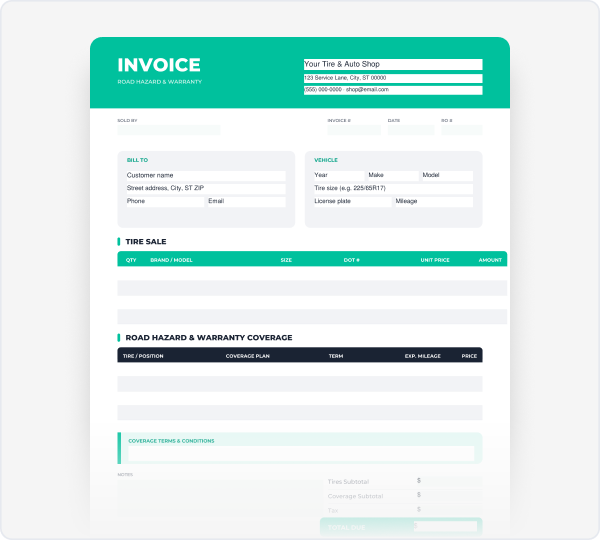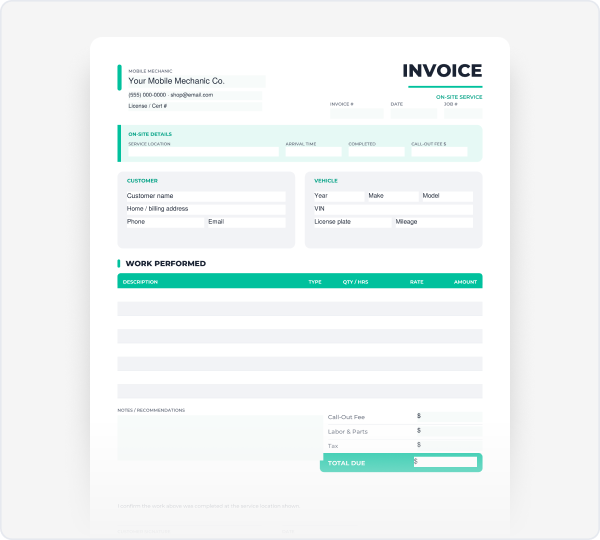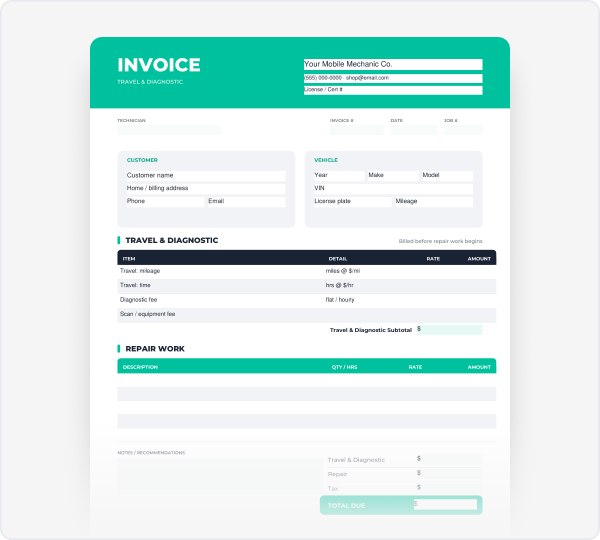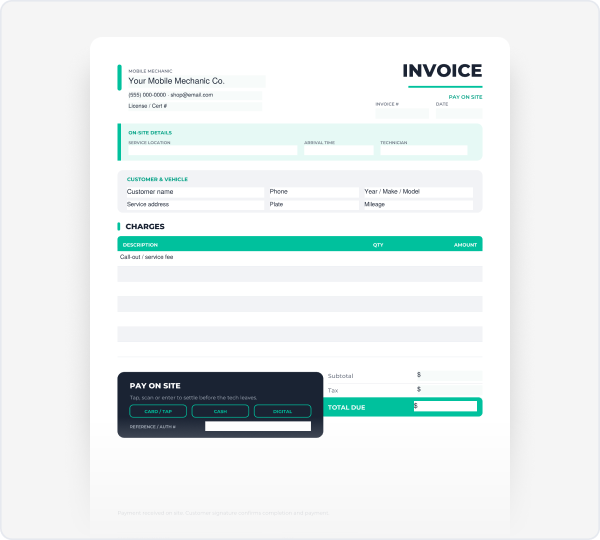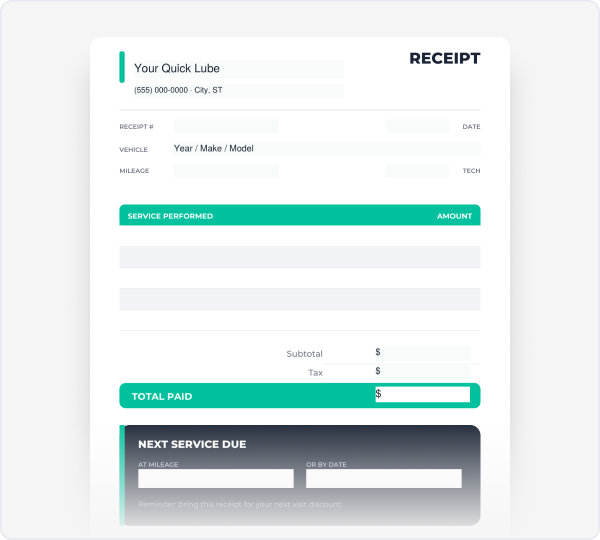

If you’ve ever had a customer dispute a charge, ghost you after a repair, or ask “what exactly am I paying for?”, there’s a good chance the invoice had something to do with it. It’s not because the work was bad, but because the paperwork didn’t do its job.
A well-written auto repair invoice is a paper trail, a trust signal, and a legal document all rolled into one. Get it right consistently. Because it will help make collections easier, disputes rarer, and customers will come back because they feel like they’re dealing with a professional operation.
This guide walks through the whole process, what goes on an invoice, how to structure it for different types of jobs, and how to build a system that doesn’t eat up your evenings chasing down unpaid bills.
The basics of auto shop billing
Before we get into the line items and formatting, it helps to understand what an auto repair invoice is and what it isn’t.
The core elements of a professional bill
An auto repair invoice is the final, itemized document you give a customer when their vehicle is ready for pickup. It tells them exactly
- What work was done
- What parts were used
- How many labor hours were charged
- What does the total come to, including taxes and fees?
That sounds simple, but the “final” part matters more than most shop owners realize. No, an invoice can’t be a rough estimate, and it isn’t a work order. It’s the authoritative record of what happened during that service visit, agreed upon by both parties before money changes hands.
From a practical standpoint, a complete invoice protects you in a few important ways:
- It gives you documentation if a customer disputes a charge weeks later.
- It shows regulators and auditors that your billing is transparent and consistent.
- It builds customer confidence, especially for first-time visitors who don’t know you yet.
Customers who receive a clear, itemized bill are significantly less likely to push back on pricing. When people can see exactly what they’re paying for, three hours of labor at $95/hr, one OEM alternator, one serpentine belt, it stops feeling like a number pulled from thin air and starts feeling like a fair exchange.
Difference between a repair order and a final invoice
A lot of shop owners use these two terms interchangeably, and it causes real confusion, both internally and with customers.
Here’s the key difference:
A repair order (sometimes called a work order or RO) is the internal document your technician works from. It gets created when the vehicle comes in, lists the customer’s complaint, the authorized work, and the estimated costs. It’s essentially the job ticket. It can change as the tech digs in and discovers additional issues. And any changes should be authorized by the customer before the work continues.
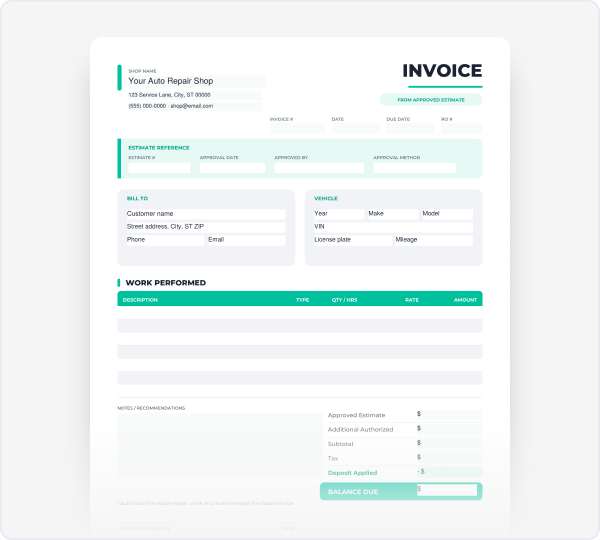
The final invoice is what the repair order becomes once the job is complete and all the numbers are confirmed. It reflects actual time spent, actual parts used, and any additional work that was approved along the way. The final invoice is what the customer signs off on and what you keep in your records.
The mistake shops make most often is handing customers something that looks like an estimate. They add vague line items, approximate hours, no part numbers, and call it an invoice. If a customer feels like they’re looking at a rough guess rather than a final accounting, they’re going to question it. And they won’t be wrong to.
Very simply, the repair order is the plan, and the invoice is the report. One happens before the work, and the other after. Never hand a customer the plan and charge them without converting it into a proper final document.

Create the perfect customer bill step-by-step
Now let’s get into the actual construction of an invoice. We will take you through what fields it needs to contain and why each one matters.
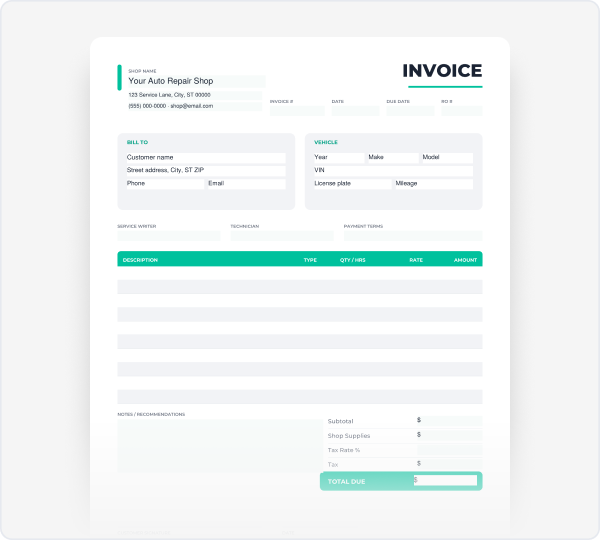
List customer, vehicle, and shop details
Every invoice needs three sets of identifying information before you even get to the work itself.
Your shop’s information:
- Business name, address, and phone number
- Email address or website
- Your state license number (required in most states)
- Invoice number (unique, sequential, important for your records)
- Invoice date and payment due date
Customer information:
- Full name and contact number
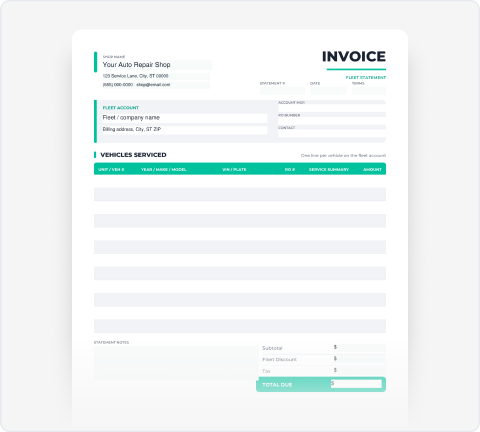
- Billing address (especially important for fleet or commercial accounts)
- Email address if you’re sending digital copies
Vehicle information:
- Year, make, model, and trim
- VIN (Vehicle Identification Number)
- Current mileage at check-in
- License plate number
That VIN line is one that shop owners skip, and it’s a mistake. The VIN is what ties the work to that specific vehicle beyond any doubt. If a customer comes back in six months saying the repair failed, or if there’s ever a warranty question, the VIN is what closes the loop. Write it on every invoice, every time.
Itemize parts, labor rates, and added taxes
Customers scrutinize this section the most. Pay extra attention here. The goal is complete transparency with zero ambiguity.
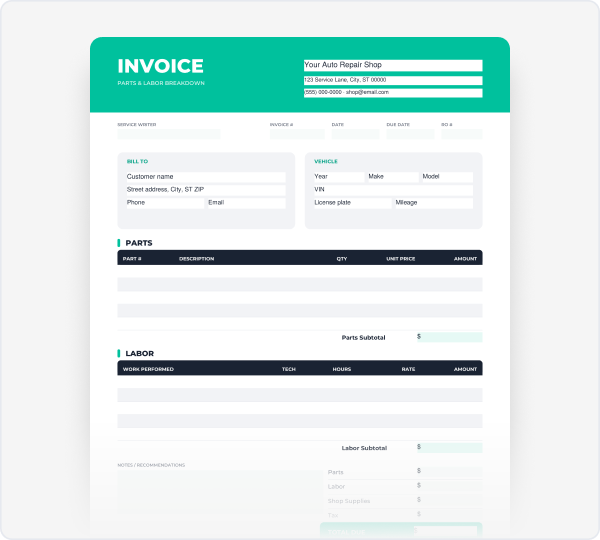
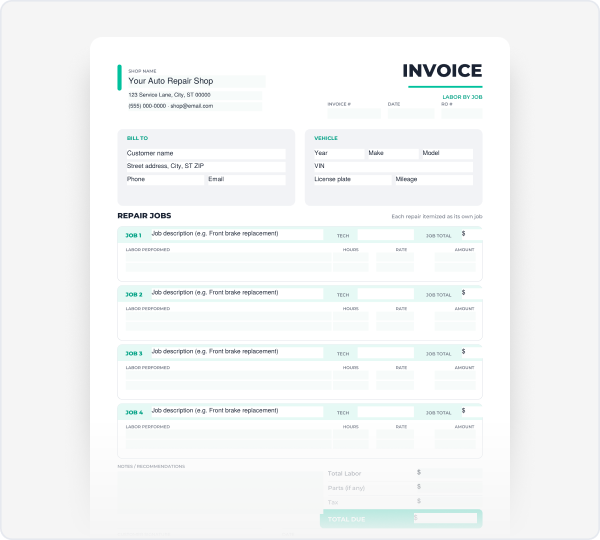
Labor should be broken out by job, not lumped together. Each service task gets its own line, including the number of hours (or fractions thereof) and your hourly rate. For example:
- Brake pad replacement: front axle: 1.5 hrs @ $95/hr = $142.50
- Rotor resurfacing: front axle: 0.5 hrs @ $95/hr = $47.50
Parts should list each item individually with a part number where available, a brief description, the quantity used, and the price per unit. Don’t write “brake parts: $215.” Write out each component. Customers who see a part number can look it up. Customers who see a vague category feel like they’re being charged a mystery fee.
Sublet work: if any portion of the job was sent out to a specialist (alignment shop, glass installer, machine shop), it should be listed as a separate line item clearly labeled as sublet, along with what the third party charged.
Fees and taxes go at the bottom: shop supply fees (if you charge them, explain them briefly), applicable state tax, and any environmental disposal fees for fluids or parts.
Be careful of one thing always. Avoid technician shorthand in your service descriptions. “R&R alt w/ belt” means something to your techs but nothing to most customers.
Write it out: “Removed and replaced alternator and serpentine belt.” It takes five extra seconds and eliminates a class of questions entirely.
Tailor invoices for specific shop services
Not every job is the same, and your invoicing should reflect that. A 30-minute oil change invoice looks nothing like a three-day transmission rebuild, and both should look different from a warranty repair.
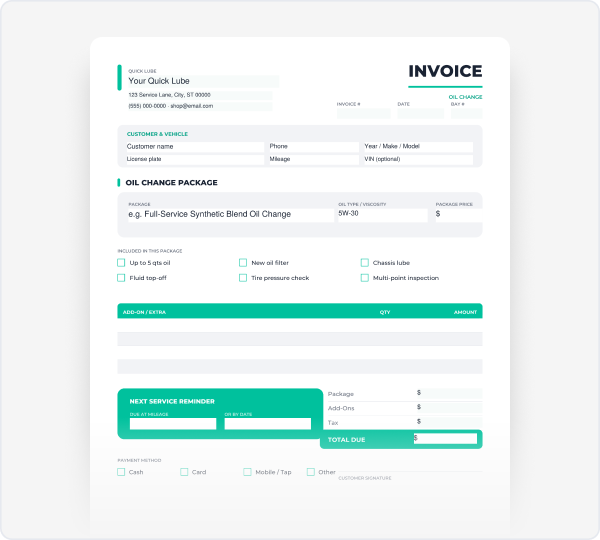
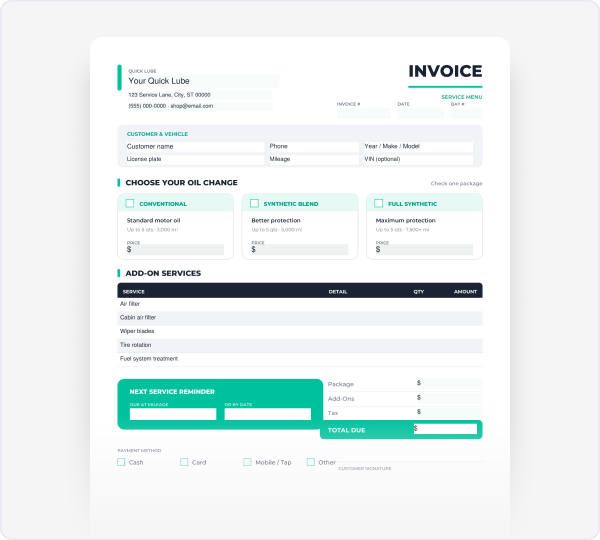
Create a standard routine maintenance invoice
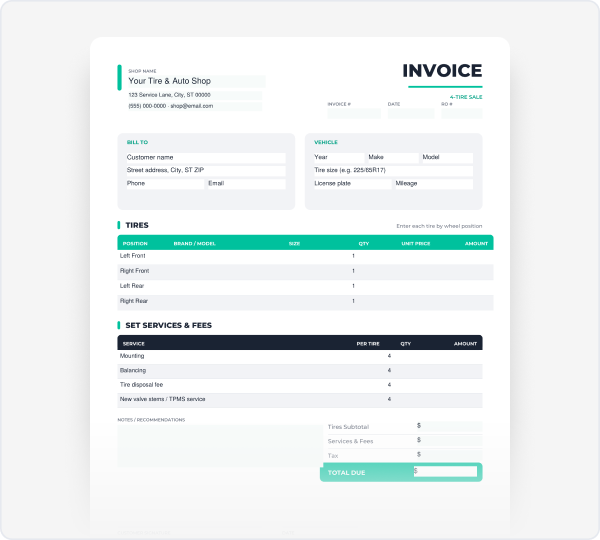
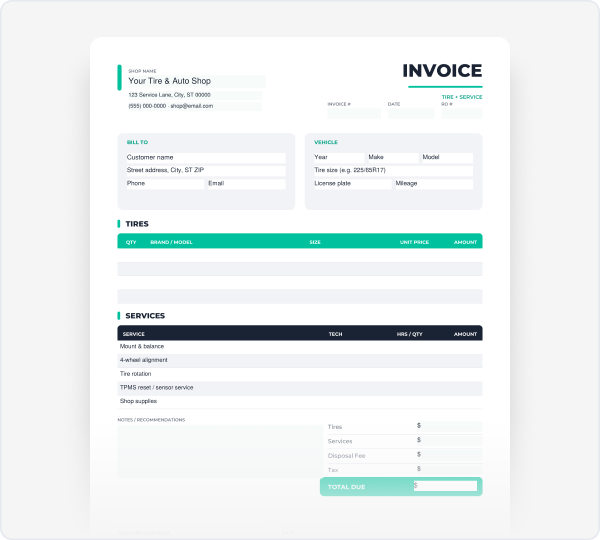
Routine maintenance invoices, oil changes, tire rotations, air filters, and wiper blades are your highest-volume paperwork. These are the ones where efficiency matters most, because you’re processing them constantly.
The structure is the same as any other invoice, but the descriptions can be more streamlined because the services are familiar. Customers generally know what an oil change involves; you don’t need to explain the process in detail. What you do need to include is the specific product used.
A good oil change line looks like this:
- Engine oil and filter service: 5 qts Valvoline Full Synthetic 5W-30, OEM filter | $74.95
- Tire rotation: 4 tires, torqued to spec | $19.95
- Multi-point inspection: complimentary | $0.00
Note the mileage in and out, the next recommended service interval (“Next oil change recommended at 57,500 miles or 6 months”), and any advisory items the tech flagged during the inspection.
Advisory items aren’t charges, they’re observations. But documenting them on the invoice does two things
- It shows the customer you’re looking out for them
- It gives you a record that you flagged the issue before it became a problem.
This level of detail earns trust and turns one-time customers into loyal ones.
Format of a car repair invoice for major jobs
Major repairs include engine work, transmission rebuilds, suspension overhauls, and collision-related repairs. These require more detailed invoicing, not less. This is where shops most often run into disputes, and where complete documentation earns its keep.
Here’s how a major repair invoice differs from a routine one:
Diagnostic charges need their own line. If you spent two hours diagnosing a transmission fault before determining it needed a rebuild, that diagnostic time is billable and should be listed separately from the repair labor. Many shops skip this, absorb the diagnostic cost, and then wonder why complex jobs feel unprofitable.
Authorization notes matter. If the job scope changed mid-repair, a tech found additional damage once the transmission was out, note on the invoice that the customer was contacted on a specific date, the additional work was explained, and approval was given. This turns a potential dispute into a documented conversation.
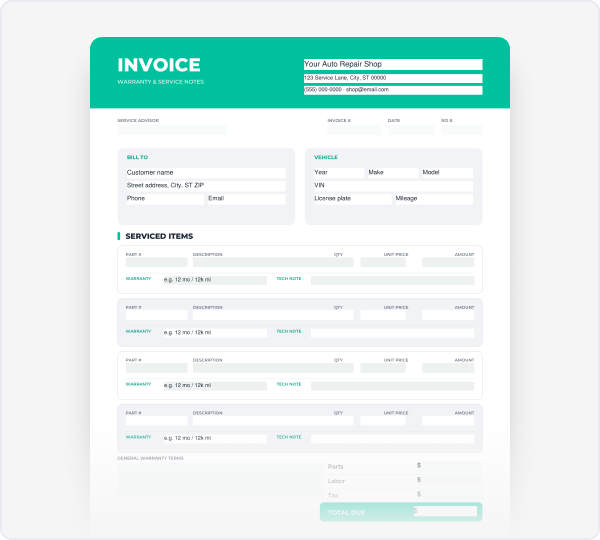
Warranty terms belong on the invoice. If the repair or parts carry any warranty, state it explicitly: “Parts and labor warranted for 12 months / 12,000 miles from date of service.” If a component is used or remanufactured, note that too. Customers who aren’t told about warranty limitations upfront will assume manufacturer-level coverage, and that’s a conversation you don’t want to have six months later.
Disclaimers for pre-existing conditions are worth including on any major job. Something like: “Vehicle exhibited signs of deferred maintenance before repair. Shop is not responsible for unrelated failures discovered after service completion.” It sounds formal, but it protects you, and most reasonable customers understand it.
Streamline your shop’s invoice process for growth
Getting the content of your invoices right is step one. Step two is building a system so that producing those invoices doesn’t take a chunk out of every service advisor’s day.
Move from paper to digital invoice software
Paper invoices work until they don’t. At low volume, five to ten cars a day, a paper system can hold together. Push past that, or try to look back at a job from three months ago, and the cracks start to show. The paper gets lost. Handwriting is misread. There’s no automatic backup.
Digital invoicing software built for auto shops does several things paper can’t:
- It pulls vehicle history instantly when a returning customer checks in. You can see exactly what was done, what was recommended, and what was declined, all before the customer finishes explaining why they’re back.
- It generates invoices automatically from the repair order, reducing double-entry and the math errors that come with it.
- It stores everything searchable and retrievable, so a warranty question from eight months ago takes thirty seconds to answer instead of thirty minutes of digging.
- It lets you email or text an invoice to a customer before they even come to pick up their car, so payment is ready by the time they arrive.
The transition takes some setup, but most shop management platforms are designed to be learned by service writers, not IT professionals. If you’re still on paper and processing more than a handful of cars a day, the time you’ll recover in the first month alone typically justifies the switch.
Automate follow-ups and customer reminders
The end of the month shouldn’t mean a stack of unpaid invoices and an afternoon of awkward phone calls. If that’s happening regularly, it’s because there’s no system prompting the customer to act.
Digital invoicing tools let you set automatic payment reminders that go out via text or email at intervals you control: three days after invoice, seven days, fourteen days. The message is professional, non-confrontational, and goes out without you lifting a finger.
Beyond collections, the same automation can handle service reminders. For example, a customer who got an oil change six months ago can receive an automatic text that it’s time to come back. Or a customer who declined a brake job in March gets a follow-up note in April.
These aren’t pushy sales tactics; they’re helpful nudges that keep your shop top-of-mind and give the customer a reason to act on something they already knew they needed.
The shops that grow steadily might not have the flashiest tech or the best mechanics. The ones that are growing often treat every customer interaction, including the invoice, as part of a system designed to make people want to come back.
Frequently Asked Questions
What details distinguish an auto repair invoice from other shop documents?
An auto repair invoice is the final billing document issued after the work is complete. The invoice reflects actual work performed, actual parts used, confirmed labor hours, and final pricing.
How do you structure a repair invoice to ensure regulatory compliance?
Requirements vary by state, but most jurisdictions require invoices to include your shop’s name, address, and license number; the customer’s name and contact information; the vehicle’s year, make, model, and VIN; an itemized breakdown of parts and labor; and the total charges, including applicable taxes.
When should a repair order invoice be updated or converted during the service process?
The repair order should be updated any time the scope of work changes. Every change should be documented with the date and a note indicating customer approval was obtained. The repair order converts to a final invoice once all work is complete, all parts are confirmed, and the total is finalized.
What should be included on an invoice for recurring or preventive maintenance?
Routine maintenance invoices should include the specific products used (oil type and viscosity, filter brand and part number), the services performed with brief descriptions, current mileage at check-in, and recommended next service mileage, and any inspection findings — both advisory items and items that were addressed.
How should you document complex services or warranty work on a customer bill?
For complex repairs, the invoice should include a separate line for diagnostic labor, notes on any mid-job scope changes with dates of customer authorization, and explicit warranty terms for both parts and labor. For warranty work, clearly note whether the repair is covered under a previous invoice’s warranty, the original invoice number, and what is and isn’t included in the coverage.
What invoicing practices help auto shops minimize payment issues or disputes?
The most effective practices are to itemize everything, use plain language in service descriptions, get written or text-documented authorization for any work that wasn’t on the original estimate, and issue the invoice digitally so the customer sees it before they arrive for pickup.