



Looking at Shop Management Systems? See How AutoLeap Stacks Up.

16 Mechanic Shop Organization Ideas for Maximum Efficiency

16 Mechanic Shop Organization Ideas for Maximum Efficiency

If your auto repair shop has frequent tools missing, technicians are frustrated, and jobs are always getting late, then you might need to consider some serious organization for your shop. A properly organized auto repair shop can drive performance, and a poorly organized one will wreak havoc on performance. 

We’re here to go over 16 actionable ways you can organize your shop for peak efficiency. Before that, let’s understand what real-world efficiency even looks like in a shop setting, so you can identify which areas of your shop need immediate attention. 

Table of Contents

Schedule a free demo today!

Boost your shop sales

Simplify shop management

Empower your technicians

What “peak efficiency” looks like in a well-organized shop

Every single minute your auto technicians spend looking for a wrench, or dodging a cluttered floor, or worse, tripping over the mess, you lose time and money. Your customers might not see what’s going on behind closed doors, but they might feel the impact. For instance, if their vehicle is dirty when it comes back, repair times are dragged, or even if services are rushed. 

So, before your auto shop runs into this problem, let’s see which areas are falling short. Here’s what you need to look into:

Time management

See if your auto technicians are spending too much time finding the right tools. Do they spend more time looking for things to work with or getting the work done? This is a clear indicator of a poor layout and missing inventory. 

Space optimization

Is your space optimized for efficiency, or is equipment all crammed together? Are there boxes upon boxes with random stuff that no one can find what’s needed? Wasted space slows everything down, and if it’s poorly organized, it might even create safety hazards.

Task coordination

How well are your technicians able to coordinate jobs? Do they spend more time waiting for parts or approvals? Do they meet their deadlines, or do jobs get stacked up simply because technicians spend time looking for the right parts to work with? 

Accessibility of parts and tools

Are the frequently used tools easy to locate? Are they reachable? Or are they all buried under junk? Short delays can compound to hours of lost productivity. 

Customer flow

If the cars outside are piling up and customers don’t know where to go, this is another indicator that the shop is badly organized. It will lead to a bad first impression and a disorganized service flow. 

To counter the above areas, let’s talk about the ways to organize your shop to achieve peak efficiency. These are practical, easy to put into action, and can help you manage day-to-day challenges. 

16 ways to organize your shop for peak efficiency

1. Use mobile tool carts for active jobs

If your auto shop has a stationary toolbox, techs lose time walking back and forth for frequently used tools. You can get mobile tool carts for different bays and active jobs. This makes it easier for auto technicians to drag the tool cart wherever they are going. This can store sockets, torque wrenches, and scanners close by. 

For example, if a technician is working on brakes, they won’t need to cross the shop multiple times just to get the right tools. Less back and forth means the job gets done faster. 
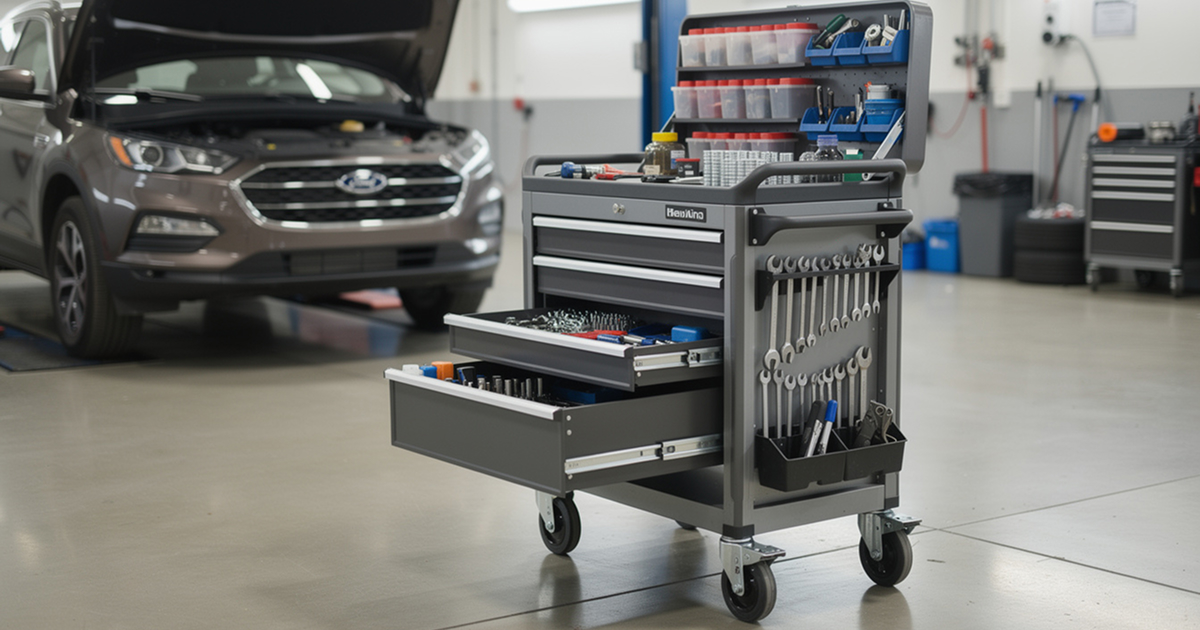
using mobile tool carts in auto repair shop

2. Color-code and label everything

Clearly label everything in the auto shop. Whether that is oil filters or electrical tools, put labels on all equipment. This will make it easy for anyone looking for specific things in the shop. You can also use color-coded buckets or bins for parts, fluids, and even specialty tools. 

For instance, if you have a separate labeled bin for each vehicle brand (Toyota, Ford, etc), your auto technicians won’t waste time hunting for the right parts as they are servicing. 
labelling everything in the auto shop

3. Implement a digital job board

When you have one or two bays, a whiteboard is sufficient to manage jobs. However, as your auto shop scales, invest in auto repair software with a digital job board. These will give you a better understanding of tech assignments, time tracking, and it will help you manage queue visibility. You can get tablets in the bay. This will help all your technicians stay in sync.

4. Assign dedicated zones for each task type

Divide your shop space into zones. You can make separate zones for diagnostics, tire/wheel, quick oil changes, and complex repairs. This depends on what type of jobs you get the most.

Following effective auto shop layout ideas can help improve workflow and reduce cross-traffic.  manage the flow and reduces cross-traffic. This way, someone working on transmission fluids won’t be interrupted by tire rotations. They will have their zones and allocated spaces. 
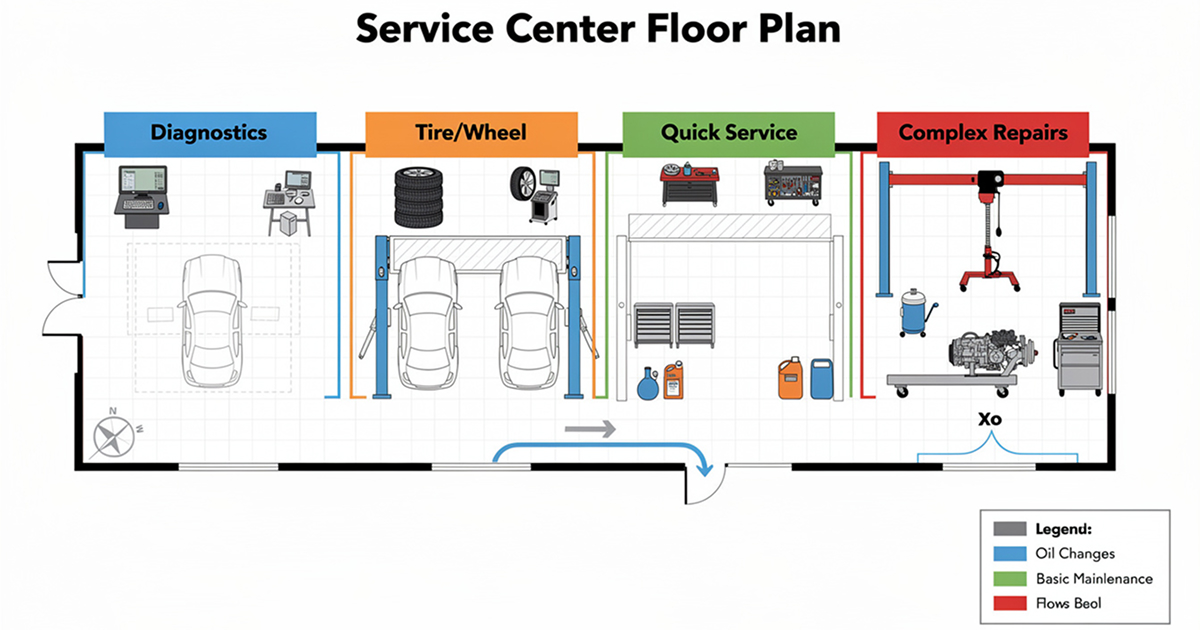
Service Center Floor Plan for Maximum Efficiency

5. Audit and purge unused equipment monthly

Often auto shops still have outdated equipment lying around. These take up a lot of space. This space can be better allocated to other newer equipment. It’s always a good practice to perform a monthly or quarterly audit. Remove any unused equipment that hasn’t been used in over 60 days. 

Use an auto parts inventory management system to save time and track all inventory and equipment in your shop

Free Shop Organization Checklist

Download this free one-page checklist featuring all 16 shop organization tips to quickly assess your workspace. Improve safety, efficiency, and productivity with actionable tasks you can implement this week. 

6. Store frequently used parts near bays

The most commonly used parts, such as brake pads, oil filters, bulbs, etc, should all be placed near workstations. They need to be easily accessible. In case they are stored across the shop, it’s time to reallocate them near the required area. 

Even if you reduce time per repair by 5-7 minutes, it can help your auto technicians take on dozens of more jobs per week. 

7. Set up a centralized diagnostic station

At times, diagnostic tools are scattered around or in a tech’s toolbox. Instead, you can create a shared diagnostic bay. Keep it stocked with scan tools, multimeters, service manuals, etc. This reduces tool hoarding, and all technicians will know where all the critical tools are. 
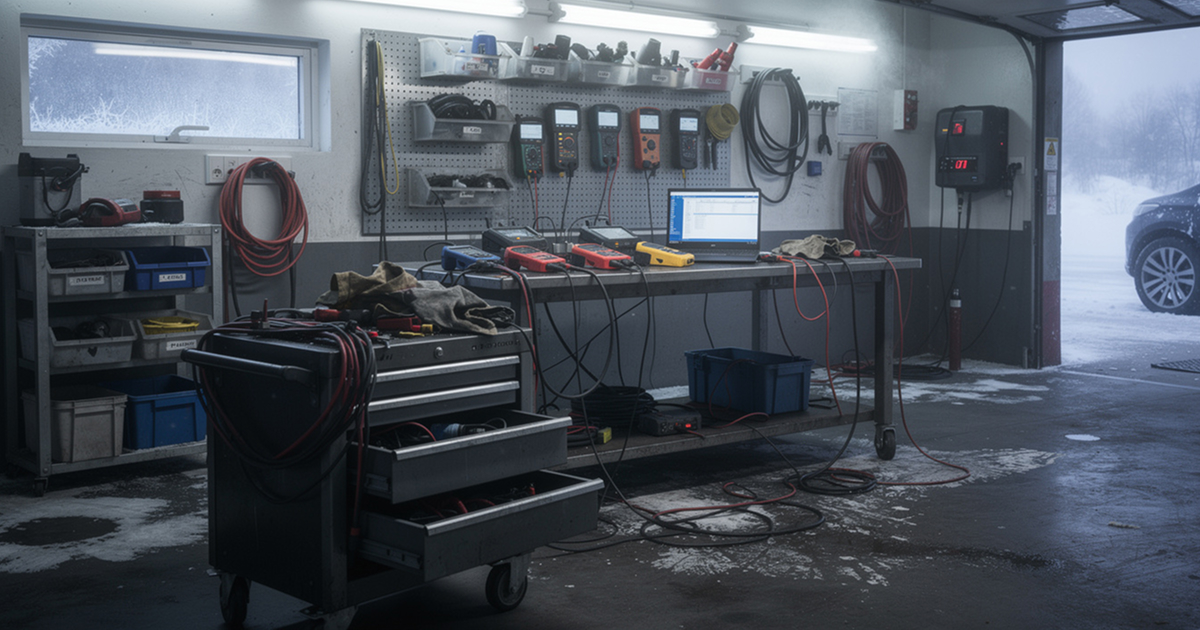
a centralized diagnostic station

8. Build a designated receiving area for parts deliveries

How often do you get parts delivered to the auto shop? Do they arrive randomly at the front counter? This will create chaos and reduce productivity. Assign a delivery zone. Add intake shelving and barcode scanners. This will help you manage parts delivery better. You will avoid delays with misplaced deliveries or mixing parts for different jobs.

9. Create Standard Operating Procedures (SOPs)

More than just labeling shelves, organized shops have set proper standard operating procedures in place. They have systems. These standardize work and remove any confusion. Common tasks such as oil changes, tire rotations, parts returns, etc, can all follow proper SOPs. Make a list of your SOPs and place them in each bay. Otherwise, keep them on tablets. Every staff member must be aware of these SOPs. 

10. Schedule daily cleanup time

At closing, don’t leave the shop in chaos. Keep the last 30 minutes of the day to clean and reset the area. The next morning, they will come back to a clean space, which will boost productivity the next day. They start each day fresh, without having to fix the last day’s mess. 

11. Vertical & High-Density Storage

Pegboards, wall-mounted racks, plus ceiling hooks are great entry-level vertical storage options. It is good for storing ladders, hoses, and extension cords. Rollout shelves are good for oil cans, cleaning supplies, and small tools. These shelves provide easy access and full visibility. Use wall-mounted sliding bypass units for long-handled tools. These include brooms, pry bars and hoses that take wall space when stored flat. 

Use multi-drawer steel cabinets for parts storage. Fasteners, clips and small hardware used as mechanic shop equipment can be easily sorted by size or vehicle type. Use ceiling hooks for ladders, hoses, and extension cords overhead to free floor and wall space. 

When everything is up against the wall, it frees up walkways. A free floor space also reduces trip hazards and makes it safe for technicians to walk across during busy hours.
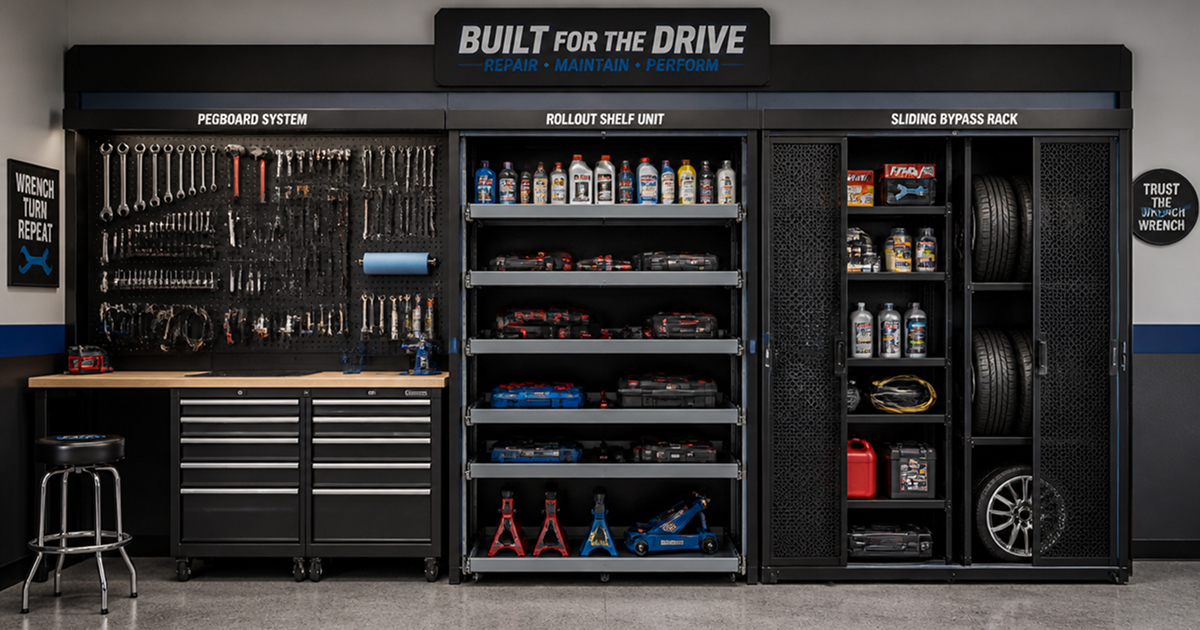
example of a High-Density Storage

12. Track tool usage with a checkout system

When tools go missing, it wastes the tech’s time. Either use a clipboard or a digital tracker to know which tech is using which specialty tool. Even add in how long they will have it, so everyone knows how long before they can get that particular tool. This will reduce ‘where’s the scanner’ arguments on the shop floor. 

13. Safety & Compliance

Ensure shop safety with the right fire extinguisher placement in every bay. Make sure it is regularly inspected and marked clearly. Hazardous chemicals and solvents need to be stored in labelled, designated cabinets away from heat sources. 

Clear aisles and walkways to reduce trip hazards and support safe movement around the shop. 

Maintain proper lighting and ventilation to improve visibility, air quality and technician productivity. Regular safety checks help prevent accidents and follow OSHA guidance on keeping paths clear; minimum clearance widths for active bays.
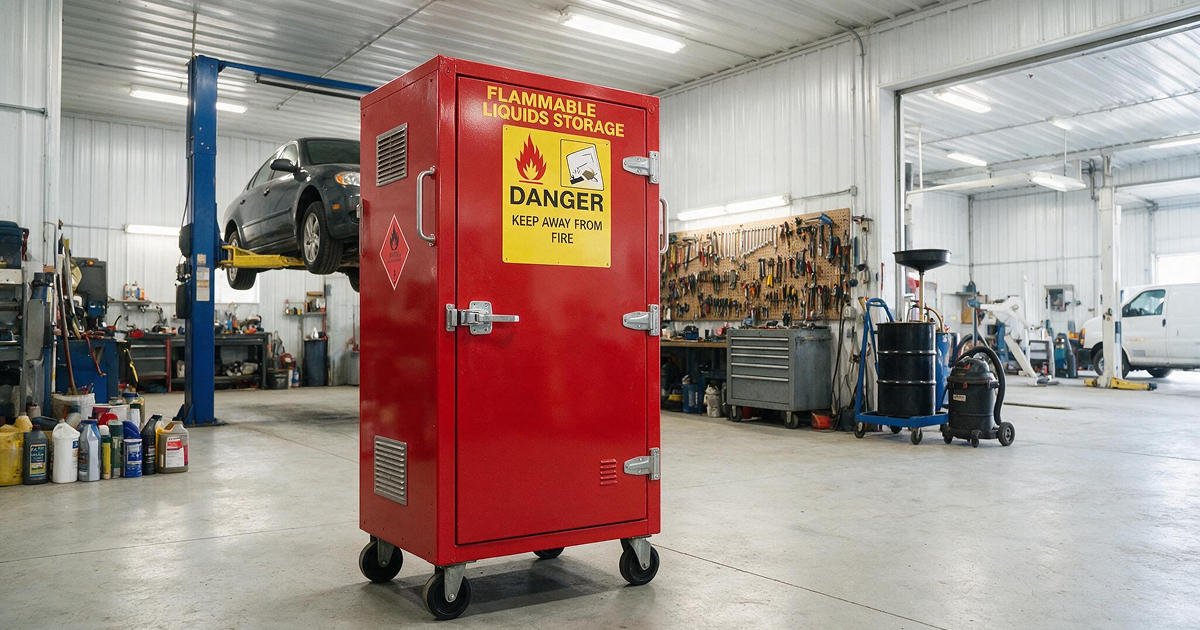
shop safety with the right fire extinguisher placement

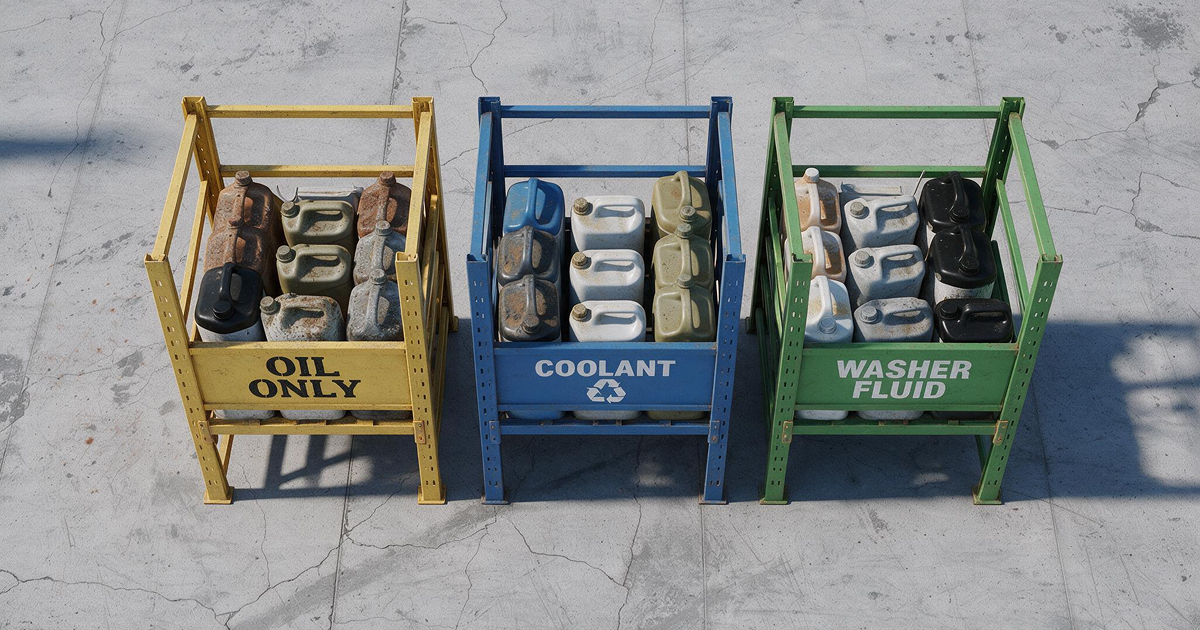
14. Fluid Organization & Waste Management

All fluid containers such as motor oil, coolant, transmission fluid, or brake fluid must be labelled. This is to prevent mix-ups and avoid costly mistakes later. Create a dedicated fluid dispensing station where dispensing nozzles are organized by fluid type and with stackable storage for bulk supplies.  

A separate spent fluids station that has labelled containers for used oil, coolant and transmission fluid. This is so they are ready for disposal pickup. Schedule regular hazardous waste pickups through approved local providers. Stay EPA-compliant and keep the shop clean, organized, and environmentally responsible. 
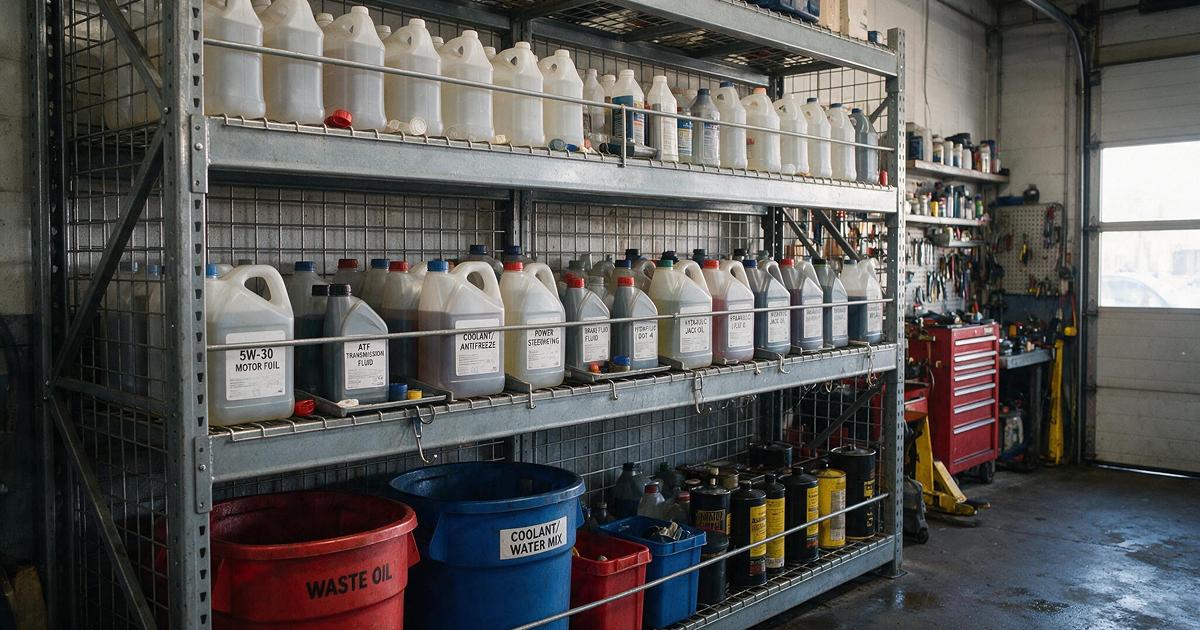
fluid organizer in auto shop

15. Front Desk & Service Counter Organization

Keep service area organized with a repair order rack. Use wall-mounted racks that is organized by job status  (waiting, in progress, completed). This will reduce clutter and lost ROs. Install a lockbox board for key storage system near bays. Technicians will know where vehicle keys are. 

Keep your auto repair shop’s customer-facing counter and waiting room clean and minimal. Do not clutter the counter with internal paperwork and move it away to the back shelf. Connect the front desk with the shop management system so service advisors and technicians can access the same repair information in real time. 
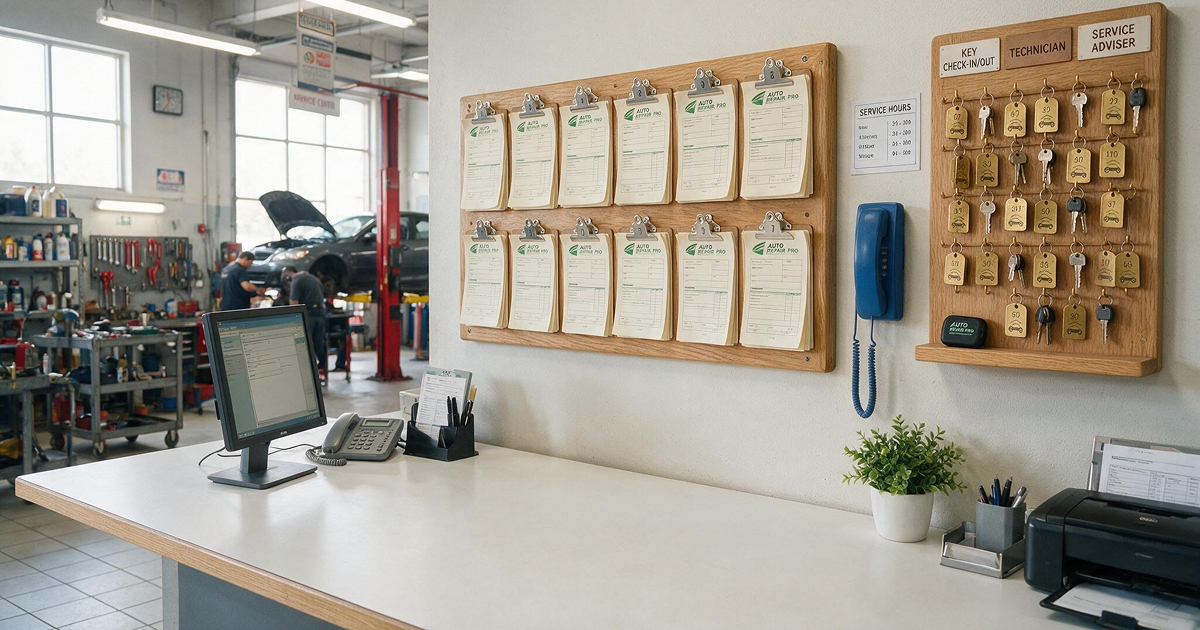
organized front-desk in auto repair shop

16. Ongoing Staff Training & Process Ownership

Keeping your shop organized is not a one-time project. It is an ongoing process. It requires giving regular training to staff on tool returns, parts handling and end-of-day cleanup procedures. 

Post visual SOPs and zone maps in each bay. This will reinforce expectations and serve as a reminder to follow instructions. Assign ownership of each bay or work zone to individual technicians, ensuring accountability for cleanliness and organization. Regular refresher sessions help maintain standards and keep workflows efficient. 

repair shop staff is getting a training

Wrapping up

Organizing your shop isn’t going to be a one-time project. It is a consistent habit. It’s a system you build and implement. Every staff member is responsible for it; it is not just one person’s responsibility. These might seem like small changes, but collectively, these result in faster job times, better morale, and fewer mistakes. And what does that result in? Happy and satisfied customers. That is the end goal, right? 

So, if your shop is all chaos right now, start with a few small steps. Choose a couple of the ideas here, and work with those. You’ll see how small changes lead to bigger results. 

FAQs

How much does it typically cost to organize a mechanic shop?

Basic organization with labels, bins, and pegboards typically costs $500–$2,000. Mid-level upgrades range from $5,000–$15,000, while a complete overhaul can cost $20,000–$40,000. Start with labeling and storage zones, then add shelving, equipment, and software as your budget allows.

Maximize wall space instead of floor space with pegboards, shelves, and mobile carts. Create dedicated zones for diagnostics, parts, and waste, even in small shops. Keep the service counter clutter-free and avoid permanent floor storage that restricts vehicle movement.

Most shops have technicians provide their personal hand tools, while the business supplies shared specialty equipment like scan tools and lifts. Use a checkout system for shared tools and assign fixed storage locations to reduce delays, confusion, and misplaced equipment.

Success comes from clear processes, not reminders. Post visual SOPs, assign ownership of each work bay, schedule daily cleanup time, and recognize technicians who consistently maintain their work areas. Accountability and routine make organization part of the workflow.

Conduct a full layout review annually or whenever new services are introduced. Perform monthly walkthroughs to check storage and workflows, and schedule quarterly equipment and inventory audits to remove unused items and keep the shop organized.

OSHA requirements include 1910.106 for proper storage of flammable liquids, including approved cabinets for certain chemicals; 1910.1200 (Hazard Communication) for labeling chemical containers and communicating hazards; and 1910.22 for keeping walking surfaces and aisles clean, orderly, and free of hazards. OSHA guidance also references a 28-inch minimum width for exit access routes, while general shop aisles should be sized for safe movement and equipment access.

Create a dedicated EV service area with high-voltage safety signage, insulated PPE storage, and non-conductive floor matting. Store high-voltage tools and battery packs separately from other chemicals, and train technicians on EV-specific safety procedures before servicing vehicles.

Table of Contents
    Contents
    Table of Contents

      Advice delivered to
      your inbox

      Our newsletter full of inspiration, webinars, tips and news.