


Every tool in your shop sends a signal to your technicians, to your customers, and to the bottom line. The right brands hold up under daily professional use, get replaced quickly when they fail, and help your team work faster without second-guessing their equipment. The wrong ones create callbacks, slow down diagnostics, and cost more in lost time than they saved at purchase.
The brands in this guide were selected based on four criteria applied consistently across every entry:
- Real-world durability under professional shop conditions
- Warranty terms and how practical they are to use
- Value at each price tier
- Endorsement from working mechanics in professional forums and head-to-head tests.
No brand paid for inclusion in this guide. There is no affiliate commission influenced placement or ranking. Every recommendation in this list is built from mechanic community consensus and comparative performance data, the signal that separates genuine professional guidance from a generic list assembled for clicks.
Brands are organized by tool category so you can navigate directly to the purchasing decision most relevant to your shop rather than reading a list that treats impact sockets and cordless drills as the same category. If you’re focused on running a more efficient repair shop, the toolbox is where operational efficiency starts. This guide is built to help you spend those dollars correctly.
| Brand | Category | Price Tier | Warranty | Best For |
| Snap-on | Hand tools | Premium | Lifetime, truck swap | Long-term durability and maximum service convenience |
| Matco | Hand tools | Premium | Lifetime, truck swap | Ratchet mechanism quality and full hand tool coverage |
| Mac Tools | Hand tools | Premium | Lifetime, truck swap | Specialty and hard-to-find tooling gaps |
| Gearwrench | Ratchets | Mid-range | Lifetime, retail exchange | High-torque pass-through ratchet without truck pricing |
| Wright Tool | Hand tools | Mid-range | Lifetime, direct claim | Shops requiring American-made and documented provenance |
| SK Tools | Hand tools | Mid-range | Lifetime, direct claim | Maximum ratchet durability under high-torque applications |
| Proto | Hand tools | Mid-range | Lifetime, direct claim | Fleet and government shops needing ASME compliance |
| Craftsman | Hand tools | Entry-level | Lifetime, retail same-day | Startup shops building first toolbox on a tight budget |
| DEWALT | Hand tools | Entry-level | Lifetime, retail exchange | Fastener-protection socket geometry at entry-level price |
| Husky | Hand tools | Entry-level | Lifetime, retail same-day | Supplementary and low-frequency tooling needs |
| Kobalt | Hand tools | Entry-level | Lifetime, retail same-day | Supplementary and specialty size additions |
| Milwaukee | Cordless | Premium | Lifetime hand / 5yr power | Shops replacing pneumatic tools with cordless |
| Makita | Cordless | Mid-range | Lifetime, direct claim | Shops already invested in the Makita battery ecosystem |
| DEWALT Cordless | Cordless | Mid-range | Lifetime, retail exchange | Shops needing same-day battery and charger availability |
| OTC | Specialty | Mid-range | Varies by product | Specialty jobs beyond what standard catalogs cover |
| Sunex | Impact sockets | Mid-range | Lifetime, direct claim | Professional impact socket durability at mid-range pricing |
| Tekton | Hand tools | Mid-range | Lifetime, photo, ships next day | Fastest and most frictionless warranty at any price point |
| Knipex | EV-insulated | Premium | Manufacturer warranty | EV high-voltage service requiring IEC 60900 certification |
| Facom | EV-insulated | Premium | Manufacturer warranty | Full insulated tool set for EV high-voltage system access |
How we selected these brands
Selection criteria: what separates a professional tool brand from the rest
Four criteria determined every brand that made this list, and every brand was evaluated on all four, not just the ones where it performs well.
Real-world durability means how tools hold up under daily professional use. Not how they perform in a manufacturer’s lab. A ratchet that functions perfectly under controlled torque spec testing but develops slip after three months of shop use is not a professional-grade tool. Community reports, long-term ownership reviews, and head-to-head comparative tests were weighted more heavily than spec sheets.
Warranty practical usability means how fast and easy the claim process actually is, not just whether a lifetime warranty exists. A brand offering lifetime coverage with a six-week mail-in process and a requirement for original proof of purchase is materially different from a brand that replaces the tool on the truck during the next visit. For a working shop, a broken wrench needs to be replaced the same day. Warranty claim speed is a shop productivity variable, not just a coverage detail.
Price-to-value at each tier means whether a brand delivers professional-grade performance without requiring professional-grade spending. The entry-level and mid-range tiers in this guide contain tools that perform at or near premium levels for specific applications, identifying those specific applications is what makes this guide useful for budget decisions.
Mechanic community endorsement means what working mechanics say in professional forums, YouTube channels and comparative tests, not what the manufacturer’s marketing says. This is the criterion that separates reputation from performance, and it is why this guide includes brands like Sunex and Tekton that most competing articles ignore despite consistent top-tier ratings from professional mechanics.
How to use this guide based on your shop’s situation
A startup shop building a toolbox from scratch should read the budget and mid-range sections first and resist the pull toward premium brands before the shop’s core revenue is established. An established shop upgrading specific categories should jump to the section covering that category to identify the specific performance gap each brand fills. A shop adding EV service capability should read the specialty tool and EV-ready sections specifically, insulated tooling for high-voltage work is a distinct purchasing decision from standard automotive tooling.
Before we move forward, we know professional mechanics build mixed toolboxes. They do not buy every tool from one brand. They choose each brand for the category it dominates. This guide is organized specifically to support that approach, choosing Snap-on for ratchets, Milwaukee for cordless, and Sunex for impact sockets is not brand disloyalty. It is how experienced shops actually build their equipment.
Premium professional hand tool brands
Snap-on: the professional standard for hand tools
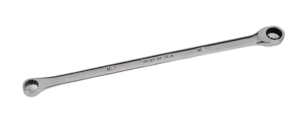
Snap-on holds 24.1% of votes for best tool brand in Pro Tool Reviews’ 2026 reader survey. The standout technical differentiator is flank-drive wrench geometry. Instead of gripping a bolt at its corners, which rounds corroded fasteners quickly, Snap-on wrenches contact the flat face of the fastener. This dramatically reduces rounding on the rusted bolts that make up a large share of shop work. On a busy day with corroded suspension components, that design choice prevents callbacks and saves time that compounds across every repair order.
The tool truck service model is the second reason professionals justify the pricing. When a Snap-on ratchet fails, the rep replaces it at the shop on the next scheduled visit, typically within a week, without a mail-in process, without documentation requirements, and without the technician leaving the bay. For shops running at volume, that convenience has a measurable dollar value.

Snap-on
THE VERDICT
The most trusted hand tool brand in professional automotive shops, justified by flank-drive wrench geometry and a tool truck service model designed for zero shop downtime.
BEST FOR
Shops and individual mechanics who prioritise long-term tool durability and maximum service convenience over initial cost.

PRICE TIER
Premium

WARRANTY
Lifetime — truck-swap replacement
Matco tools: premium quality with broad tool truck reach
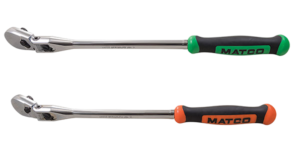
Matco’s standout product is its flexible-head ratchet, a design detail that working mechanics cite consistently in professional forum discussions. The flexible ratchet head pivots at an angle while maintaining full ratcheting action, letting technicians reach fasteners in cramped engine bays without adding an extension. On a modern engine bay where access angles are limited by packaging, cutting out one tool change per job saves minutes that add up across a full day.
Matco’s product range, ratchets, sockets, wrenches, and specialty hand tools, covers the full professional hand tool spectrum, and the brand’s tool truck distribution covers most major markets, making warranty service accessible without travel.
Matco
THE VERDICT
A premium tool truck brand with one of the best flexible-head ratchet designs in the professional tier, built for tight-clearance engine bay work.
BEST FOR
Shops that prioritise ratchet mechanism quality and need full-service hand tool coverage from a single truck-based source.
PRICE TIER
Premium
WARRANTY
Lifetime — truck-swap replacement
Mac tools: professional grade with specialized hard-to-find tooling
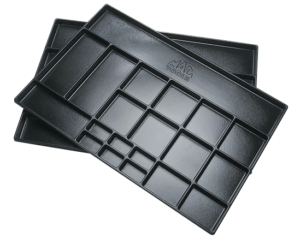
Mac Tools operates under Stanley Black & Decker but maintains separate research, development and product design from DEWALT and Craftsman. Mac Tools has built its reputation specifically in hard-to-find specialty tooling and professional organizational accessories that the other SBD brands do not stock.
Professional mechanics in shop forums consistently call out Mac’s magnetic trays, bit holders and tool storage organization accessories as differentiators that improve workflow beyond what the tools themselves deliver. The brand’s professional tool catalog includes pneumatic and specialty items that Snap-on and Matco either do not carry or carry at significantly higher prices.
Mac Tools
THE VERDICT
The premium tool truck brand to reach for when the specialty tool no one else stocks is the one blocking the job.
BEST FOR
Shops that already have a primary hand tool brand and need specialty and hard-to-find tooling to fill the gaps standard ranges leave.
PRICE TIER
Premium Warranty
WARRANTY
Lifetime — truck-swap replacement
Best value professional hand tool brands
Gearwrench: the ratcheting wrench innovator that professionals trust
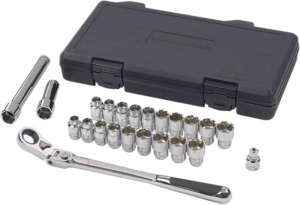
Gearwrench’s XP pass-through ratchet and socket system is a genuine engineering innovation with practical shop implications. The system allows sockets to pass completely through the ratchet head, enabling use on long bolts and threaded rods, the kind of fasteners that standard ratchets cannot engage because the bolt extends too far to seat a socket fully. Any shop doing suspension, steering, or subframe work encounters this situation regularly.
The 120XP ratchet produces a 3-degree arc swing, meaning the ratchet advances with every 3 degrees of movement rather than the 5 degrees required by a standard 72-tooth ratchet. In a tight space where the tool can only move a few degrees before hitting sheet metal or an adjacent component, the 120XP continues working where competitors lock up. In a head-to-head test by Project Farm on YouTube comparing ⅜-drive ratchets from major brands, Gearwrench produced the highest torque output of all units tested.
Gearwrench
THE VERDICT
The brand that pioneered pass-through ratchet technology and produces one of the highest-torque ratchets in any class, at a fraction of tool truck pricing.
BEST FOR
Shops that need professional-grade ratchet performance and pass-through socket capability without tool truck pricing.
PRICE TIER
Mid-range
WARRANTY
Lifetime — retail exchange
Wright tool: American-made, industrial strength at a justified price
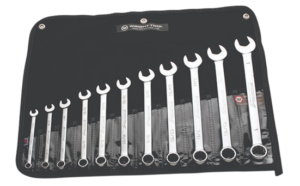
Wright Tool uses proprietary alloy steel that the company specifies independently rather than sourcing from shared OEM suppliers. This separates Wright from brands that rebadge tools made to common industry specifications. It matters specifically for shops doing high-liability industrial, fleet, or government fleet work where equipment traceability is part of the documentation requirement.
For repair shops, the practical argument for Wright is simpler. The tools are built to heavier and to tighter tolerances than most mid-range competitors, and the lifetime warranty covers professional shop use without the caveats that some mid-range brands include in their coverage terms.
Wright Tool
THE VERDICT
American-made heavy-duty construction backed by a lifetime warranty, built for shops where tool provenance and traceability are a business requirement.
BEST FOR
Shops and fleet operations where American-manufactured tools and documented equipment provenance are a business or liability requirement.
PRICE TIER
Mid-range
WARRANTY
Lifetime — direct claim
SK tools: a century of quality with high-torque ratchet innovation
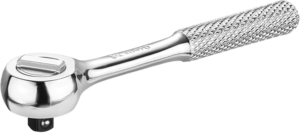
SK Tools defines innovation as the SuperKrome ratchet’s reverse-taper socket drive, which prevents the drive square from rounding even under extreme torque loads, a structural design detail that standard square drives do not include. On high-torque applications like lug nuts, axle bolts, and suspension components, that protection extends tool life significantly beyond what standard ratchets deliver under the same conditions.
SK’s full range covers sockets, ratchets, and combination wrenches with the same manufacturing attention to drive geometry, and the brand’s century-long history in professional tooling gives it a track record that newer mid-range brands cannot match.
SK Tools
THE VERDICT
One hundred years of professional tool manufacturing behind the SuperKrome ratchet’s reverse-taper socket drive, the high-torque choice for maximum drive square durability.
BEST FOR
Mechanics and shops that prioritise maximum ratchet durability under high-torque applications and want a proven track record behind the brand.
PRICE TIER
Mid-range
WARRANTY
Lifetime — direct claim
Proto: heavy-duty precision for industrial and fleet mechanics
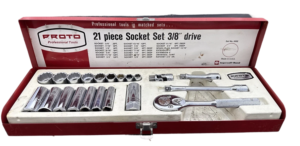
Proto tools are designed and manufactured to ASME (American Society of Mechanical Engineers) and federal specifications. This means they meet the standards required for government fleet maintenance, industrial equipment contracts, and institutional shop environments where specification compliance is not optional.
For commercial vehicle shops, municipal fleet operations, and dealerships servicing equipment under government contracts, Proto is the choice that satisfies both performance requirements and compliance documentation. For general automotive shops, Proto’s heavy-duty construction also makes it appropriate as the primary brand for high-frequency, high-torque tasks like commercial vehicle and heavy equipment work, where consumer-oriented professional brands are not built for the load.
Proto
THE VERDICT
The only hand tool brand in this guide designed and manufactured to ASME and Federal specifications, built for industrial and government contract compliance.
BEST FOR
Fleet shops, government contractors, and commercial vehicle operations where ASME and Federal specification compliance is a contract requirement.
PRICE TIER
Mid-range
WARRANTY
Lifetime — direct claim
Budget and entry-level brands worth buying
What “entry-level” means in a professional context
Entry-level tools in a shop environment are not unsuitable for professional use. These are appropriate for a startup shop with limited startup capital. Or a technician building their first personal toolbox on a budget, or supplementary tools for low-frequency jobs where premium investment is not justified by usage rate.
The distinction that matters is between entry-level tools that will survive professional use and consumer-grade tools that will not. For example, a Craftsman combination wrench set handles daily professional use. A Harbor Freight chrome wrench set purchased without quality screening often does not. Budget does not automatically mean false economy, but choosing the wrong budget brand makes it one.
Craftsman: convenient warranty coverage at an accessible price
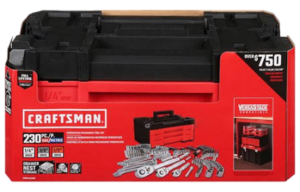
The Craftsman’s lifetime warranty on hand tools is not differentiated from competitors’ by its coverage terms. Most professional brands offer comparable coverage. It is differentiated by claim speed. When a Craftsman wrench breaks during a job, the technician walks into the nearest Home Depot or Lowe’s and walks out with a replacement the same day, with no mail-in process, no original receipt requirement, and no scheduling a tool truck visit. For a working shop in a market with strong retail access, that convenience is a meaningful shop productivity advantage.
Craftsman’s 230-piece mechanic’s tool set runs approximately $150 at major retailers. That range makes Craftsman the most accessible complete hand tool starter set in professional-grade tooling, covering ratchets, sockets in SAE and metric, combination wrenches, and a torque wrench at a starting cost that does not require financing.
Craftsman
THE VERDICT
The strongest case for entry-level hand tools is same-day warranty exchange at any Home Depot or Lowe’s, no mail-in, no receipt, no scheduling required.
BEST FOR
Startup shops and new technicians building a first toolbox on a limited budget who need same-day warranty replacement at retail locations.
PRICE TIER
Entry-level
WARRANTY
Lifetime — retail same-day exchange
DEWALT: DirectTorque technology at the entry-to-mid price point
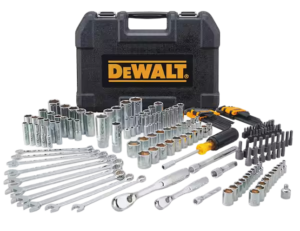
DEWALT’s DirectTorque socket geometry grips fasteners on the flat face rather than the corner, the same design principle that justifies Snap-on’s premium pricing, delivered at an entry-to-mid-price point. For a shop owner who understands that rounded fasteners create callbacks and additional labor, this specification matters at any price level.
DEWALT’s position across both hand tools and the 20V MAX cordless ecosystem also creates purchasing efficiency, with tools from one brand on one warranty terms structure, with replacement parts and batteries available at any major hardware retailer.
DEWALT (Hand Tools)
THE VERDICT
DirectTorque socket geometry delivers premium fastener-protection at entry-to-mid pricing, the same flat-face grip principle that justifies Snap-on’s premium cost.
BEST FOR
Shops that want premium-tier fastener protection geometry in their socket set without tool truck pricing.
PRICE TIER
Entry-level
WARRANTY
Lifetime — retail exchange
Husky and Kobalt: lifetime warranty retail brands for shop startups
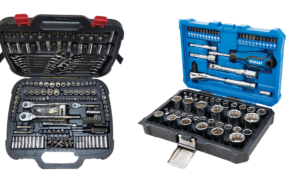
Husky (Home Depot’s store brand) and Kobalt (Lowe’s store brand) both offer lifetime warranty coverage on hand tools at retail prices, making them genuinely useful for a well-organized shop’s secondary tooling needs. A shop that needs a second set of socket extensions for a new bay, a specialty wrench size used on one vehicle make, or duplicate common tools to avoid bay-to-bay transport does not need premium-brand spending on those items. Husky and Kobalt fill that role correctly.
The common mistake is building the entire primary toolbox from either brand to minimize startup cost. Ratchets, sockets, and combination wrenches used on every repair order justify a mid-range or higher investment. Because the time lost to failures, rounding bolts with low-tolerance sockets, and chasing warranty replacements costs more than the price difference within the first year.
Husky
THE VERDICT
A lifetime warranty retail brand appropriate for supplementary tooling, specialty sizes, and low-frequency items — not the right primary toolbox brand for high-volume technicians.
Kobalt
THE VERDICT
A lifetime warranty retail brand that fills the same role as Husky — correct for secondary and low-frequency tooling, not for the primary ratchets and sockets used on every job.
BEST FOR
Supplementary tooling, specialty size additions, and startup shops filling secondary tool needs without overextending the budget.
PRICE TIER
Entry-level
WARRANTY
Lifetime — retail same-day exchange
Best cordless automotive power tool brands
Cordless tool selection is a fundamentally different purchasing decision than hand tool selection, and the stakes are higher. Battery ecosystem lock-in means that the first major cordless purchase, typically an impact wrench or a drill, determines the brand for every cordless tool added to the shop afterward. Mixing battery platforms multiplies charging stations, complicates spare battery inventory, and creates cross-training complexity for technicians. The brand decision for the first impact wrench matters more than the price of that individual tool.
Whether an air compressor or cordless tools better suit your shop setup is a decision worth making deliberately before committing to a battery platform, since the answer affects infrastructure investment as much as tool brand selection.
Milwaukee tool: the professional standard for cordless automotive
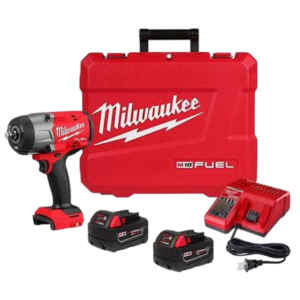
Milwaukee’s M18 FUEL ½-inch high-torque impact wrench produces up to 1,400 ft-lbs of nut-busting torque in a cordless platform. It is enough to handle most wheel, suspension, and drivetrain fasteners that previously required a dedicated air compressor and pneumatic impact wrench. For shops in markets without reliable utility infrastructure for large compressor setups or shops building out a new bay without existing pneumatic plumbing, that performance threshold changes the infrastructure calculation.
Milwaukee received 14.9% of the votes for the best tool brand in Pro Tool Reviews’ 2026 reader survey. This has been a dramatic increase from under 2% three years prior. That trajectory is the clearest measurable signal, as professional tool surveys show that cordless automotive tools are actively replacing pneumatic tools in working shops, and that Milwaukee is leading that shift.
Milwaukee
THE VERDICT
The fastest-growing brand in professional mechanic surveys because the M18 FUEL ½-inch high-torque impact wrench replaces pneumatic impact wrenches on most shop jobs without an air line.
BEST FOR
Shops transitioning from pneumatic to cordless and shops building new bays where cordless eliminates the infrastructure cost of pneumatic plumbing.
PRICE TIER
Premium
WARRANTY
Lifetime (hand tools) — 5 years (power tools)
Makita: The multi-platform cordless ecosystem for shops running mixed equipment
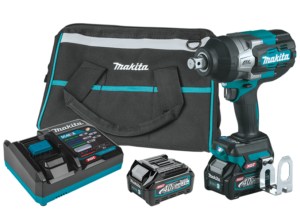
Makita’s LXT 18V and XGT 40V MAX battery systems power over 325 cordless tools within the Makita ecosystem, the largest single-brand cordless catalog available. For a shop that already runs Makita cordless tools, every new tool purchase reuses existing batteries and chargers, which changes the total cost calculation significantly. A second impact wrench, an angle grinder, a reciprocating saw, and a work light all run on the same batteries already on the charger.
Makita’s automotive lineup, impact wrenches, angle grinders, cut-off tools, and polishers cover the full power tool range needed in a general repair shop, with the 40V MAX XGT platform delivering higher torque output for heavy-duty applications.
Makita
THE VERDICT
The largest cordless tool catalog of any single manufacturer, making it the lowest total-cost option for shops already invested in the Makita battery platform.
BEST FOR
Shops already running Makita cordless tools where battery ecosystem efficiency is a higher priority than individual tool performance comparison.
PRICE TIER
Mid-range
WARRANTY
Lifetime — direct claim
DEWALT cordless: the accessible power tool platform for mixed-use shops
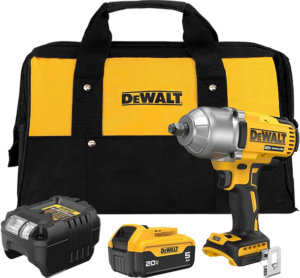
DEWALT’s 20V MAX platform is the most widely stocked cordless ecosystem in retail hardware stores across the United States. This means batteries, chargers, and replacement tools are available at any Home Depot or Lowe’s without waiting for a tool truck visit or placing an online order. For shops in rural or suburban markets where tool truck coverage is inconsistent, that availability difference is operationally significant.
DEWALT’s cordless performance in the mid-tier range, impact wrenches, drills and oscillating tools, delivers consistent professional-grade output appropriate for general automotive service. The platform does not match Milwaukee’s peak torque output on high-torque applications, but for general shop use, it performs at the level most automotive jobs require.
DEWALT Cordless
THE VERDICT
The most widely stocked cordless ecosystem in U.S. retail — batteries, chargers, and replacement tools available same-day at any Home Depot or Lowe’s.
BEST FOR
Shops in retail-accessible markets prioritising same-day parts availability, and shops that want hand tools and cordless under one brand and warranty structure.
PRICE TIER
Mid-range
WARRANTY
Lifetime — retail exchange
Best specialty and diagnostic tool brands
OTC tools: diagnostic and specialty equipment for technical work
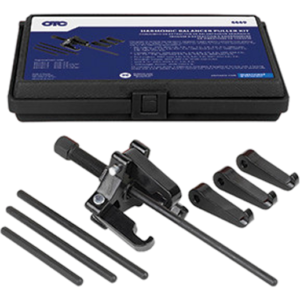
OTC (Owatonna Tool Company) has built its reputation specifically in the specialty tool segment, the tools that standard hand tool brands do not make, and that professional shops need to complete specific jobs. Harmonic balancer pullers, fuel injector removal tools, transmission jack adapters, and OBD-adjacent specialty diagnostic equipment are OTC’s core catalog, not peripheral additions.
For choosing the right OBD-II scanner for your shop, OTC’s diagnostic line covers both the scanning tools and the complementary specialty equipment needed to act on what those scanners find. Most established shops have at least several OTC specialty tools alongside their primary hand tool brand. OTC’s value is not in building a complete toolbox but in filling the gaps that complete toolboxes leave.
OTC Tools
THE VERDICT
The first brand to check when the job requires a specialty tool no general hand tool catalog stocks — pullers, hydraulic presses, injector service tools, and transmission equipment.
BEST FOR
Any established shop that encounters specialty jobs beyond what standard hand tool catalogs cover, which describes every shop that sees more than basic maintenance work.
PRICE TIER
Mid-range
WARRANTY
Lifetime — retail exchange
(Note: Warranty varies across OTC’s catalog. If you can confirm a standard term, update accordingly. Otherwise “Varies by product” is the honest call.)
Sunex tools: professional-grade impact sockets at mid-range pricing
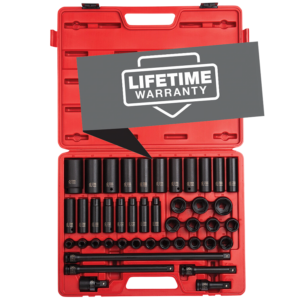
Sunex’s impact sockets use thicker-walled construction than most brands at their price point, making them appropriate for sustained daily pneumatic and cordless impact use without the deformation that thinner-walled sockets develop over time. Impact socket walls that deform under repeated use create a safety hazard. A socket that no longer seats fully on a fastener transfers force unevenly, risking fastener damage or socket failure under load.
In Flat Rate Master’s YouTube tier list of 18 automotive tool brands evaluated on quality, value, warranty ease, and availability, Sunex was placed in the highest tier, ranked above Snap-on, which was placed in the B tier. That placement from a channel built specifically on working mechanic evaluations is the external evidence that separates Sunex from the category of brands that merely claim professional quality.
The brand name may be less familiar than tool truck names, but brand name recognition in automotive tools is largely a function of marketing spend and tool truck visibility, not product quality. Mechanic community consensus consistently rates Sunex above several better-known names when evaluated on actual performance and value.
Sunex
THE VERDICT
Working mechanics consistently rank Sunex at the top of professional tool tier lists — thick-walled impact socket construction at pricing well below what the quality level suggests.
BEST FOR
Any shop that runs pneumatic or cordless impact tools and wants professional-grade impact socket durability without tool truck pricing.
PRICE TIER
Mid-range
WARRANTY
Lifetime — direct claim
Tekton: Direct-to-consumer value with the most transparent warranty process
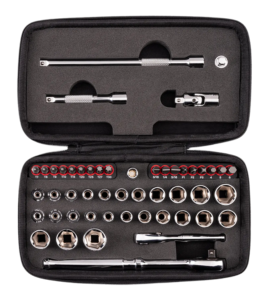
Tekton sells exclusively direct-to-consumer, which removes retail markup from every product in the catalog. The performance quality is in the mid-range professional tier, Chrome Vanadium steel, professional tolerances, full metric and SAE coverage, but the pricing reflects the direct distribution model rather than the markups associated with retail channels or tool truck delivery.
The warranty process is what consistently distinguishes Tekton in professional mechanic forum discussions: submit a photo of the broken tool through the online form, and the replacement ships the same or next day. No original receipt, no mail-in, or tool truck scheduling. For shop owners who have experienced the frustration of chasing warranty replacements from truck-based brands, Tekton’s process removes that friction entirely.
Tekton’s catalog includes over 5,000 SKUs with full dimensional specifications and CAD drawings published on their website for every product. That level of specification transparency is uncommon among tool brands and reflects a manufacturing confidence that distinguishes Tekton from brands that publish minimal product data.
Tekton
THE VERDICT
The most frictionless warranty claim process of any tool brand at any price point, combined with a direct-to-consumer model that removes retail markup from every purchase.
BEST FOR
Shops and technicians who want professional-grade tooling with the fastest and most frictionless warranty replacement process available at any price point.
PRICE TIER
Mid-range
WARRANTY
Lifetime — photo submission, ships same or next day
EV-ready tool brands for modern shops
Why does EV service require a different class of tools
High-voltage battery systems in electric vehicles operate at 400V–800V, depending on the platform. Any standard hand tool that contacts a live circuit at those voltages creates an electrocution risk that consumer-grade rubber-dipped handles do not protect against. Rubber-dipped handles offer no certified protection above standard household voltage. A technician working near a high-voltage battery pack with standard automotive tools is operating outside OSHA safety standards, and a shop allowing that practice carries liability exposure that standard automotive insurance does not cover.
1,000V-rated insulated tools are the minimum safety standard for working on or near high-voltage vehicle systems. The certification mark to verify is IEC 60900 or VDE. Only tools carrying one of these marks are certified for high-voltage automotive use. Branding, price, and visual similarity to insulated tools do not substitute for that certification mark.
The U.S. electric vehicle share of new car sales reached approximately 7.4% in 2025. At that market penetration, EV service demand is already present in most shop service areas and growing. Insulated tool investment is a near-term business decision, not a speculative one.
Brands that produce 1,000V insulated tools for high-voltage vehicle work
Two manufacturers currently lead professional-grade 1,000V insulated tool production for automotive use: Knipex and Facom.
Knipex (German manufacturer) is the strongest option for insulated pliers, cutting tools, and gripping tools rated to IEC 60900. Knipex’s insulated pliers are the reference standard in industrial electrical work and are increasingly specified for EV high-voltage battery service.
Facom (French manufacturer) produces fully insulated tool sets, including wrenches, ratchets, and sockets rated to IEC 60900, covering the complete range needed for EV high-voltage system access. Facom’s fully insulated sets are the broadest catalog available from a single brand for EV services.
Neither brand has significant U.S. tool truck distribution. This means sourcing requires going through specialty automotive equipment distributors or direct online purchase, a purchasing friction most shops have not yet worked through, which represents a service gap relative to competitors who have.
To equip one technician for basic EV high-voltage service, a shop needs a 1,000V-rated insulated socket set in metric sizes, an insulated combination wrench set, an insulated pliers set, a CAT III/CAT IV-rated digital multimeter, and high-voltage rubber gloves rated to Class 0 minimum. This is a supplementary kit alongside the existing toolbox, not a replacement for it, and the investment is significantly lower than most shop owners expect when they price it out.
Knipex
THE VERDICT
The reference standard for IEC 60900-certified insulated pliers and cutting tools, the correct choice for EV high-voltage battery service where rubber-dipped handles offer no real protection.
BEST FOR
Shops adding EV service capability that need certified 1,000V-rated insulated pliers and cutting tools for high-voltage battery system work.
Facom
THE VERDICT
The broadest single-brand catalog of IEC 60900-certified insulated tools for automotive use, wrenches, ratchets, and sockets covering the full range needed for EV high-voltage system access.
BEST FOR
Shops equipping a technician for full EV high-voltage service who need a complete insulated tool set from a single certified source.
PRICE TIER
Premium
WARRANTY
Manufacturer’s warranty.
How to build your shop’s toolbox by budget tier
Startup shop: building a complete toolbox under $5,000
A startup shop with a $3,000–$5,000 tool budget can cover 90% of daily general repair jobs with a deliberate brand selection that does not require tool truck financing.
- Start with primary hand tools from GearWrench or DEWALT, ratchets, socket sets in both SAE and metric, combination wrenches, and a quality torque wrench. Both brands deliver professional-grade performance at retail pricing, and both offer lifetime warranty coverage with accessible claim processes.
- Add Sunex impact sockets as the first professional-grade consumable purchase, and the thickness difference between Sunex sockets and budget alternatives becomes apparent within the first month of daily impact use.
- Commit the first major cordless purchase to Milwaukee or Makita, an impact wrench and a drill. This is the ecosystem commitment decision, and it determines which brand the shop adds cordless tools from for the next several years.
- Finally, add two or three OTC specialty tools for the most common specialty jobs in the shop’s target vehicle mix. This combination handles the majority of general automotive service work at a startup budget that does not require carrying tool debt.
Established shop: upgrade to professional-grade without replacing everything
An established shop does not need to replace a full toolbox to upgrade to professional-grade performance. Identify the three highest-frequency tools in daily use, typically the primary ratchet, the impact wrench, and the most-used socket sizes, and upgrade those specific items to premium brands. Keep the existing toolbox for secondary and low-frequency use.
A Snap-on or Matco ratchet used on every repair order justifies the premium because the investment amortizes across years of daily use. A Snap-on screwdriver used twice a week does not. Identifying that distinction before spending is how established shops upgrade intelligently.
Growing shop: invest in specialty and power tool capability
Once the core toolbox is established, the highest-return additions are typically cordless ecosystem expansion, a quality scan tool, and, depending on the shop’s market, a first EV insulated kit.
Cordless ecosystem expansion means adding battery-compatible tools within the existing platform. It includes an angle grinder, a light, a reciprocating saw, and a second impact wrench for a second bay. Every addition reuses existing batteries and chargers, making the per-tool cost lower than it would be starting a new platform.
A growing shop’s scan tool investment also unlocks more complex diagnostic jobs that entry-level equipment cannot handle. It directly expands the range of billable work the shop can take on.
What to look for when comparing tool brands
Warranty terms: what “lifetime” actually means in practice
The term “lifetime warranty” is nearly universal across professional hand tool brands, which means the label itself is not a meaningful differentiator. The differentiator is the claim process, and it varies significantly between brand categories.
- A lifetime warranty from a tool truck brand means the rep replaces the tool on the next scheduled visit, typically within a week.
- A lifetime warranty from a retail brand means walking into a Home Depot or Lowe’s for an in-store exchange the same day.
- A lifetime warranty from a direct-to-consumer brand means submitting a photo online and receiving a replacement by mail within one to three business days.
The best way to evaluate a brand’s actual warranty experience before purchasing is to search the brand name plus “warranty claim” on Reddit or a professional mechanic forum and read experience reports. The gap between a frictionless replacement and a six-week documentation-required mail-in process is not visible on the product listing page. It only appears in user reports. Make it part of the brand evaluation before committing.
Steel grade, tooth count, and the specifications that predict durability
Two steel grades define professional automotive hand tools, and knowing which is appropriate for which application prevents the most common tool selection mistake.
Chrome Vanadium (CrV) is the standard for professional hand tools, harder than carbon steel, more resistant to corrosion, and built to maintain torque tolerance under repeated high-load use. Any hand tool sold for professional use that does not specify CrV construction should be treated as consumer-grade regardless of the marketing language around it.
Chrome Molybdenum (CrMo) is used specifically for impact sockets. CrMo is more flexible than CrV, which allows it to absorb the sudden rotational shock produced by pneumatic and cordless impact wrenches without fracturing. A socket marketed for impact use that does not specify CrMo construction is being used outside its design intent; it will crack, shatter, or deform under regular impact use. This is a safety issue, not just a durability one.
Ratchet tooth count is the single most practical performance specification for daily shop use and the one most commonly ignored at purchase. A 72-tooth ratchet requires a 5-degree arc swing to advance one tooth. A 120-tooth ratchet requires a 3-degree arc swing. In a tight engine bay where the ratchet can only move 3 degrees before hitting sheet metal, the 72-tooth ratchet locks while the 120-tooth continues working. Tooth count is the specification that most directly affects productivity in cramped engine bays, and it is worth verifying before purchasing any ratchet regardless of brand.
One more evaluation pitfall to avoid: do not judge tool quality by weight. Heavier tools feel more substantial, but weight is a function of material density and wall thickness, not strength. A correctly proportioned CrV socket at moderate weight outperforms a heavier socket made from lower-grade steel in both durability and corrosion resistance over the life of the tool.
And before we wrap up, here’s the cheat sheet, one winner per category, so you know exactly what to grab on your way out.
Winners by Category
| CATEGORY | WINNER | WHY |
|---|---|---|
| Best for budget pros |
|
Lifetime warranty exchangeable same-day at any Home Depot or Lowe’s, no mail-in, no wait. |
| Best warranty experience |

|
Submit a photo, replacement ships same or next day, the most frictionless claim process at any price point. |
| Best USA-made |

|
Proprietary alloy steel, domestic manufacturing, and lifetime warranty with no professional-use caveats. |
| Best cordless |
|
M18 FUEL delivers 1,400 ft-lbs of nut-busting torque, enough to replace a pneumatic impact wrench on most shop jobs. |
| Best impact sockets |

|
Thicker-walled CrMo construction than most brands at this price, ranked top-tier by working mechanics above Snap-on for value. |
| Best for EV high-voltage |
|
IEC 60900-certified insulated pliers, the reference standard for industrial electrical work now specified for EV battery service. |
The bottom line
The right tools help your technicians work faster and come back fewer times to fix what should have been done right the first time. But even the best-equipped shop runs into friction when scheduling, invoicing, inventory, and customer records are managed on paper or across disconnected systems. Pairing great equipment with the right auto repair shop management software is what turns a well-tooled shop into an efficiently run business, one where the tools and the operations work together instead of around each other.