
One of the key elements of your front office is the service advisors. Your front-line worker is your service advisor who is taking care of your customers. They know what their customers want and are capable and experienced enough to guide them on service or repair requirements; they are detail-conscious, they give fair expectations on the cost, and they set schedules accurately.
That is to say, your service advisor is an extension of your brand. You must be sure that this person will be able to build a healthy relationship with your customers, techs, and any other people with whom you will be doing business. A service advisor is required to wear many hats in a day, and one of them is to manage the automotive shop management software to plan the work of technicians.

What Is a Service Advisor in Automotive?
Service advisors are automotive industry workers who serve as a point of contact between the customer and the technician. They ensure that customers understand their vehicle problems and fix them from small auto shops to dealerships. They assume the duties of customer service, technical information, and coordination of operations.
Key Responsibilities
- Greet customers, listen to issues, and manage customer interactions.
- Record vehicle problems, handle repair requests, and liaise with technicians.
- Make appointments, monitor work progress, and communicate with customers.
- Be friendly to the customers, be attentive to the details, and offer solutions.
The Role of a Service Advisor in Auto Repair Shops
Service advisors play an important role in the success of auto shops. They connect customers, technicians, and repair orders into a smooth process.
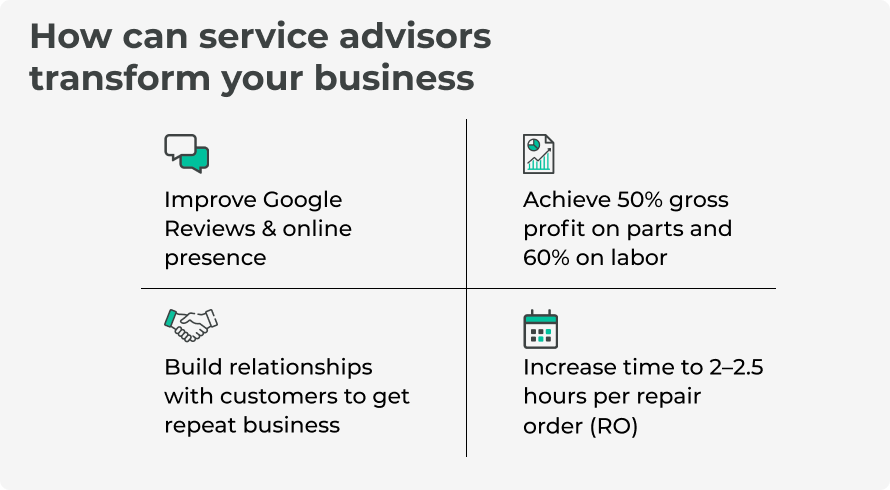
Their role directly impacts key performance metrics. They recommend the required services to customers and prioritize important repairs that increase average repair orders. High-performing shops target an average repair order (ARO) of $450–$600, with stronger advisor communication directly influencing higher ticket values.
They schedule appointments, communicate with technicians, and manage repair progress that improves workflow efficiency. Also, long-term customer relationships and follow-ups encourage repeat customers, add to profitability, and build the shop’s reputation.
Why Service Advisors Are Critical to Customer Satisfaction
Communication effectiveness and trust building of the service advisor would be a major determinant of the success of an auto repair shop in terms of customer satisfaction. Most customers lack the automotive terminology, and therefore, this makes them rely on an advisor to be able to express repairs, costs, and schedules in a clear and comfortable way. Provided that this communication can be dealt with successfully, it will contribute to the reduction of confusion and increase in trust in the provided service.
Service advisors are also important in long-term relationships with customers based on frequent communication, keeping them updated, and being professionally concerned about their issues. This is a chance to deliver a pleasant, hassle-free experience that is a direct reflection of customer loyalty, online reviews, and return business. In fact, the majority of industry participants believe that service advisors are the face of the service department, as in most cases, their interactions with the client often determine what sort of image the client will form about the entire shop.
Essential Skills for a Successful Service Advisor
You are already aware of what to take into account when hiring the most appropriate mechanic in your auto repair shop. Next, you need the best service advisor who’ll take your shop to the top.
Here are some traits of a good service advisor:
Communication Skills
Service advisors help to close the gap in communication between the suppliers, techs, and customers. This is to say that communication plays a critical role in this position. The following are some of the skills that should be possessed by service advisors:
- Stay calm: Sometimes, the lack of communication will become irritating. Service advisors should maintain their composure because how they present themselves depicts your image as a shop.
- Be transparent: In case of delays during the work process on a customer’s car, one of the service advisors must immediately notify them. Customer communication has been more crucial due to the auto parts shortage and other supply chain limitations. The drivers will be happy to receive a heads-up warning on delays so that they can make alternative transportation plans in the event their vehicles are not ready during their stay in the workshop.
- Effectively communicate things: A service advisor must be able to organize the communication with various individuals daily. In case they cannot talk to each other, it will only heighten the back and forth and reduce the overall productivity.
Organizational Skills
This is what your shop requires: a service advisor who will be multitasking, keep integrity in your shop, smile in any stressful situations, and be enthusiastic with his or her job. They must also know how to identify key performance indicators (KPIs) in addition to these soft skills. The profitability of your shop can be influenced by the margin on each repair; know the cost of parts (including markup) and how much labor time and rates and how overhead is related.
Problem-Solving Skills
Service advisors are required to exceed normal expectations to make sure that things go well. They basically schedule the day for technicians, and consequently, it can impact the entire business if the service advisors fail.
The great service advisor will turn his or her head upside down to ensure that he or she far surpasses expectations of the day, prepares himself or herself for the following day, reviews schedules, develops a plan, and is all set to go.
Daily Checklist for Service Advisors
1. Morning preparations
Service advisors start the day with the appointments. They look at the scheduled appointment and the services booked for the day. Then they do an early morning meeting with technicians. This is to ensure that they prepare for the bookings beforehand and get the resources required.
Service advisors also look at overnight drop-offs and open repair orders. These are active services or maintenance that are started but not completed. Service advisors will accommodate or align these orders during their free time.
2. Customer interactions
For starters, customers will appreciate an empathetic service advisor who is also a great listener. Can they put themselves in the customers’ shoes, understand what’s going on in someone else’s life, and know the other options available?
Service advisors are the face of your shop and need to have the ability to work well with people. Have to deal with unhappy customers at your auto repair shop? Put your service advisor forward to deal with them in a friendly manner.
3. Midday Tasks
Service advisors act as a bridge between technicians and customers. They track repair progress, order parts, and provide real-time updates. Clear communication helps manage delays, approvals, and additional repair needs efficiently.
4. End-of-Day Wrap-Up
Before they call it a day, service advisors check all orders completed and billed accurately. They double-check that all work is documented. Once it’s done, they prepare for the next day—schedule appointments, send follow-ups, and handle pending orders.
Service advisors have to go above and beyond to ensure things run smoothly. They essentially plan the day for the technicians, so it can affect the whole business if service advisors slip up.
A great service advisor will bend over backward to exceed expectations for the day, get ready for the next day, check schedules, make a plan, and be all set to go.
Service Advisor Communication Tips
Imagine a frustrated customer yelling about the major repair done without informing them. How do you deal with this situation? Transparent information is crucial for customers to understand exactly what’s wrong with their car and how it will be fixed. What’s more important is how politely this information is communicated to the customers. This is where service advisors come in.
How to Explain Repairs Without Overwhelming Customers
Before communicating, service advisors must understand the issues. This will help them to prepare for how to communicate the information without hesitation. The more confident the service advisor, the more trust customers have.
Find a good time to talk to the customer. Usually, when they are sitting in the waiting room and relaxing. Service advisors should explain the problem in simple language and avoid technical jargon. Further tell the customers how the service or repair will benefit them and is necessary for vehicle safety and long-term performance. Try to break down the whole service process into small steps. Show them videos and pictures taken through digital vehicle inspection so customers understand better without being frustrated.
Setting Realistic Expectations for Costs and Timelines
Be straightforward about pricing and expected time to repair. Explain to customers all the services included and additional steps that can impact the final estimate. 72% of customers say transparent pricing and communication drive satisfaction, highlighting the importance of clarity in building trust.
Also, clarify that additional steps are optional and would only be worked upon if needed. It is good to tell customers about changes, timelines, delays, additional repairs, and prices beforehand to build trust and avoid surprises.
Using Visual Aids and Digital Tools to Build Trust
Digital vehicle reports allow customers to see and know the problem with their own eyes using photos, videos, or digital inspection reports. Physical displays can eliminate uncertainty and enhance openness. Digitalization, such as estimates, messaging updates, and service reports, makes the communication system well-organized and gives the customer a sense of safety in their choices.
Best Practices for Service Advisors
1. Greet Every Customer with Enthusiasm
First impressions build a lasting image in the customers. When a customer walks into the auto shop, service advisors greeting customers with a warm gesture makes them feel heard and valued. They would also feel assured, as most customers come stressed about unexpected car repairs. According to industry best practices, service advisors act as the bridge between customers and technicians, so building trust early is critical to the relationship.
Listen to your customers attentively. Let them explain the problem completely. Make eye contact, keep friendly gestures, and take an interest in the conversation. Do not rush into filling out paperwork and other formalities. This makes the customers feel respected and trustworthy. Then, they are more likely to trust your service options, quickly approve repair costs, and might return for more services.
2. Verify All Information and Confirm Work Orders
When information on work orders is accurate, the process becomes smooth. It is the job of service advisors to verify all information before repair begins. Confirm and note down the customer’s concerns or any special requests. Whether they need OEM or aftermarket parts.
Review vehicle history, double-check customer contact details, and recheck all information to ensure it is written and accurate.
Prior verifications and the communication of the particulars by the service advisors at the initial stage minimize the possibility of disagreements in the future and provide a more comfortable workflow throughout the shop. Finally, accuracy and clear visibility not only increase efficiency in the operations but also the customer experience in general.
3. Follow Up with Customers After Repairs
The service advisor’s job doesn’t end when the vehicle is serviced and returned to the customer. Rather, following up and taking feedback builds long-term relationships. Ask customers about services and if they can share feedback on how to improve your services. Studies and industry blogs highlight that post-service follow-ups, such as thank-you messages or feedback requests, significantly improve customer loyalty and repeat business.
A follow-up call, text, or email can be used to ensure that the vehicle is performing well, answer any concerns, and even remind the customers of any pending maintenance. Besides, recording of services that were rejected and re-examining them in the future opens business opportunities. Customers who receive follow-ups (like thank-you messages) are 2x more likely to return for future service.
Common Challenges and How to Overcome Them
The job of a service advisor indeed is the most demanding. From meeting customer expectations to coordinating with technicians to fulfilling time-sensitive orders. All of this with a smile on the face in a rapidly changing, high-pressure environment of an auto-repair shop. Here’s how they can turn challenges into opportunities:
1. Handling Difficult Customers with Empathy
Deal with frustrated customers with empathy and active listening. Understand their concern, whether it’s repair costs or delays in repair. Then, acknowledge their frustration and offer help.
Keep a calm and polite demeanor. Start with words like ‘I know how frustrating this must be’ so that customers know that you understand their concern. Politely suggest solutions and next steps. For example, service advisors can free up maintenance work and prioritize their vehicle repair to avoid further delays.
2. Managing Time During Busy Periods
High influx of customers, peak hours, and constant phone ringing are the biggest challenges for service advisors. They can be quick to feel overwhelmed and fall behind.
The first step is to stay in charge by planning your day, checking the appointments, making priorities, and finishing urgent business first. Monitor improvement/progress with the help of digital means or shop management systems to prevent bottlenecks. It is also good to communicate with the customers and technicians proactively so as to avoid delays. Through organization and concentration, service advisors will find it easier to effectively cope with the rush times with high service demands.
3. Staying Updated on Automotive Trends and Technology
With the rise in electric vehicles and digital inspection and diagnostic systems, staying current on trends and technology for service advisors is essential. Continuous learning on automotive trends and technology is the way forward. Follow industry blogs, attend training, and communicate with technicians.
Customers are increasingly looking at advisors not only to provide service for a vehicle but also to guide them. Through their awareness, the service advisors are able to position themselves as trusted experts, enhance communication, and contribute more value to each customer interaction.
Closing Thoughts
With the right service advisors in place, your shop can thrive in boom times and during the auto repair slow season. They’re important players in your team who can help sell your services and keep customers, techs, and suppliers satisfied.
With the right service advisor taking care of your customers, you’ll have more time to focus on growing your auto repair shop.
FAQs About Being a Service Advisor
What does a service advisor do in an auto repair shop?
They bring technicians and customers on the same page by explaining services and managing repair orders.
How can I improve my communication skills as a service advisor?
Greet with a smile and talk politely. Listen attentively and talk in simple language to make them understand.
What are the most important qualities of a successful service advisor?
Communication, organizational, and problem-solving skills are most important as a service advisor.